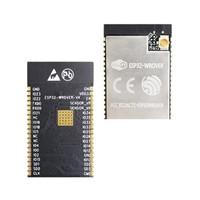
Bluetooth and Wi-Fi Module 2.4GHz to 2.5GHz 2.3V to 3.6V 38-Pin SMD Module


Hi readers! Hopefully, you are fine, searching, and learning daily. Today we will explore ESP32 which is a thrilling device in technology. ESP32 is a superliner microcontroller launched by Espressif Systems. The main focus for its evolution was to fulfill the IoT demands and edge AI projects. It is admired as special because it has high-performance speed and various connectivity options with great efficiency and affordability. It is a dual-core chip that significantly combines wifi and Bluetooth in a single. It has ideal applications in IoT projects and fog computing tasks.
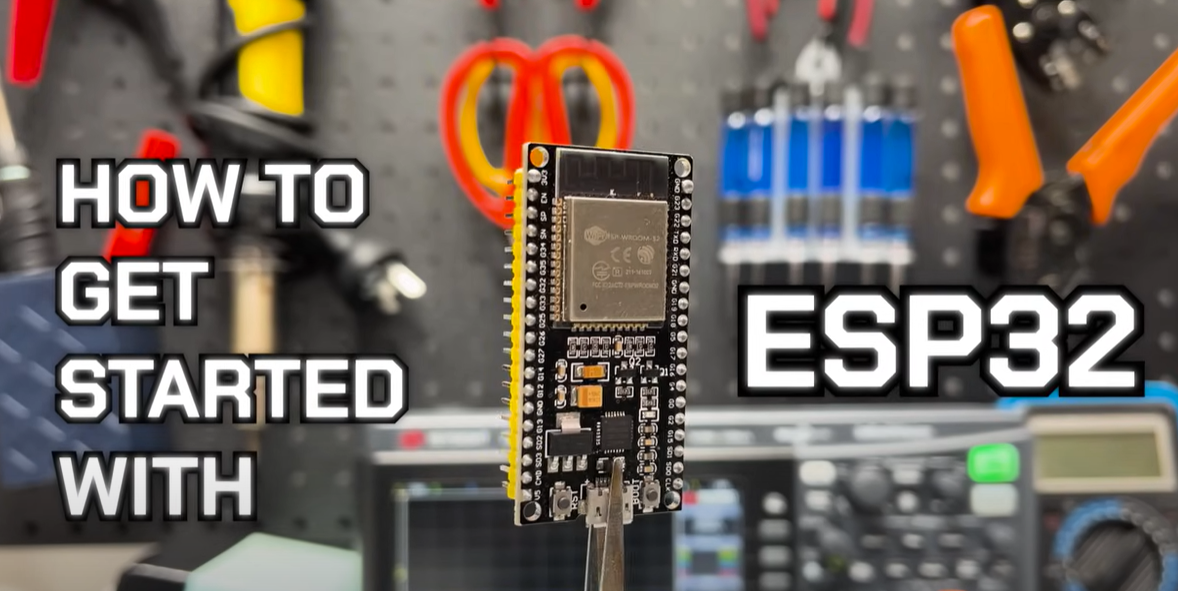
Arduino To ESP32: How to Get Started!
Introduction
It has great connectivity options for peripheral devices with less complexity. It is power efficient and performs multiple tasks at a time. It is small in size and best for portable projects and wearable technology. It has 512 KB memory which can be extended externally. It has an Xtensa LX6 processor. It is an easy-to-use and trusted platform for self-governing communities. It is in high demand in many industries and automation. When it was released it gained popularity due to its unique and significant features. It contains versatile modules and has many applications in security projects.
Recent technological advancements have marked the importance of ESP32. In this article, we will explore its introduction, significant features, thrilling applications, variations in model, datasheet, pinouts, and uses.
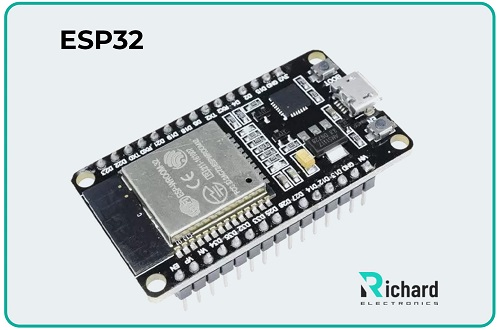
● ESP32 is powered by an Xtensa LX6 processor, a dual-core processor that operates at a clock speed of 240 MHz.
● It supports 520 KB memory.
● Espressif Systems introduce it.
● It is a compact board and highly affordable.
● It has great connectivity options for peripheral devices with less complexity.
● It is highly power efficient and perfect for battery-operated projects.
● It supports communication interfaces.
● It has various modules.
● It supports programming with unique features.
● It is a trusted platform for self-governing communities.
● It has many applications in IoT, industries, automation, wearable tech, media, and robotics.
● It is a compact board with versatile features.
● It offers good security.
Features:
Features of ESP32 are given there:
Processor:
The ESP32 consists of Xtensa LX6 processors that brilliantly serve both simple and difficult tasks regardless of their nature.
Dual-Core Architecture:
● At up to 240 MHz this new chip does its work.
● Processes 600 DMIPS (Dhrystone MIPS).
● One core does the real-time tasks while the other core is responsible for multitasking control applications.
Optional Single-Core Variants:
ESP32-S2 and ESP32-C3 are designed for power-saving or other cases.
Real-Time Performance:
● With real-time operating systems enabled (such as FreeRTOS), real-time controllers are possible.
● Latency-sensitive applications such as robots and factory automation are an example.
Integrated Hardware Acceleration:
● Offers DSP instructions for smart sound and signal processing.
● Floating-point hardware, strong enough with the help of accelerators, for performance/ML and computational applications.
A remarkable benefit of the ESP32 is its dual wireless capability in both Wi-Fi and Bluetooth.
Wireless Connectivity:
Wi-Fi Features:
● Standards Supported: IEEE 802.11 b/g/n (2.4 GHz).
● Modes: It works in Station, SoftAP (Access Point), or both combinations (Station + SoftAP).
● Advanced Capabilities: WPA3 Security: this security assurance ensures that the communication system is protected.Enterprise WPA2: One of the features it provides for enterprise levels of networks is the WPA2. Packet Injection & Sniffing: Useful for diagnostic and testing purposes.
● WPA3 Security: Ensures secure communication.
● Enterprise WPA2: For enterprise-grade networks.
● Packet Injection & Sniffing: Useful for diagnostic and testing purposes.
Bluetooth Features:
Classic Bluetooth: Classic Bluetooth allows the use of old technology devices to connect and ensures this functionality is e.g. Widely used in audio streaming and device pairing.Ensures compatibility with legacy devices. Widely used in audio streaming and device pairing.
Bluetooth Low Energy (BLE): Short-running overhead protocol for IoT which is energy-efficient. Bluetooth Low Energy (BLE) supports the BLE Mesh, enabling many devices to link together and form a network.
● Energy-efficient protocol for IoT.
● Supports BLE Mesh, allowing multiple devices to form a network.
Combined Features:
Coexistence Algorithms: The algorithms eliminate the interference energized when Wi-Fi and Bluetooth are running simultaneously.
ESP32 Memory:
ESP32 combines internal and external memory to enable different applications.
On-Chip Memory:
● 520 KB SRAM: It is divided among instruction, data, and cache memory.
● It is divided among instruction, data, and cache memory.
● 8 KB RTC Fast Memory: It resides in the memory and thus it can sustain the data of the CPU while in sleep mode and enables quick wake-ups.
● It resides in the memory and thus it can sustain the data of the CPU while in sleep mode and enables quick wake-ups.
● 8 KB RTC Slow Memory: The chip has a feature that keeps the state information in operation during the deep sleep mode. Thus, the power consumption will not exceed the ultra-low level.
The chip has a feature that keeps the state information in operation during the deep sleep mode. Thus, the power consumption will not exceed the ultra-low level.
External Memory Support:
● Flash Memory: Some modules such as ("ESP32-WROVER")&up to 16MB in flash.
● PSRAM: External PSRAM opens up additional memory for tasks like video processing and AI inference that require high computing power.
Power Management:
Power Modes:
● Active Mode: The best option when the device needs to be fully functional.
● Modem Sleep: The Wi-Fi/BT subsystem is disabled when idle.
● Light Sleep Mode: The CPU stops, The peripherals get paused, and the cloud restarts immediately.
● Deep Sleep Mode: Ultra-low-power means a radio on and GPIO and RTC in high state.
● Hibernate Mode: The minimum power state reduces the current to microamps.
Voltage Range
Between 2.2V and 3.6V, various designs enable the supervisors to track the performance and the fidelity of the input and output devices in the system which were related to the main core while it was in sleep mode i.e. without energy consumption.
Peripherals:
The ESP32’s rich set of I/O and interfaces makes it suitable for diverse applications.
GPIO Pins:
● Up to 34 GPIOs, configurable for digital or analog inputs/outputs.
● Support for multiplexing to reduce pin conflicts.
Analog Interfaces:
● ADC (Analog-to-Digital Converter): has18 channels with a resolution of 12 bits. Configurable voltage ranges (0–1.1V or 0–3.3V with attenuation).
● DAC (Digital-to-Analog Converter): Two channels for generating analog outputs (e.g., sound signals).
Digital Communication Interfaces:
● UART: Up to three UART channels for serial communication.
● SPI: High-speed communication with multiple devices (e.g., sensors, displays).
● I2C: Standardized two-wire protocol for sensor integration.
● I2S: Audio interface for microphones, speakers, or streaming data.
● CAN Bus (Optional): Automotive-standard interface for diagnostics and communication.
Specialized Features:
● PWM: 16 channels for motor control, dimming LEDs, or generating precise waveforms.
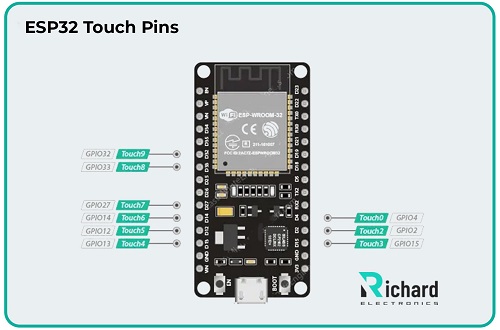
● Touch Sensors: 10 capacitive touch pins for touch-based inputs.
● RTC (Real-Time Clock): Ensures accurate timekeeping even in sleep modes.
● SDIO: Direct interface for SD cards.
Security:
ESP32 is a security-oriented IoT device that possesses a double-layered security system—a hardware layer and a software layer—both of which are strong and durable, making them virtually impossible to breach. The ESP32 supports security aspects at both the hardware and software levels concerning IoT installations.
Hardware security modules:
● True Random Number Generator: the genuinely random numbers are secured cryptographically.
● eFuse: Stored in a one-time programmable memory just for keeping private keys and device IDs.
● AES/RSA/ECC: AES/RSA/ECC Hardware Acceleration: Encryption and decryption are made quicker with the help of this feature.
Firmware protection:
● Secure boot: The system boot is long as the authenticated firmware runs successfully.
● Flash encryption: Data encoded in external flash memory is decrypted.
Wireless security:
It supports WPA3, WPA2-Enterprise, and further advanced protocols for secure connection.
Datasheet:
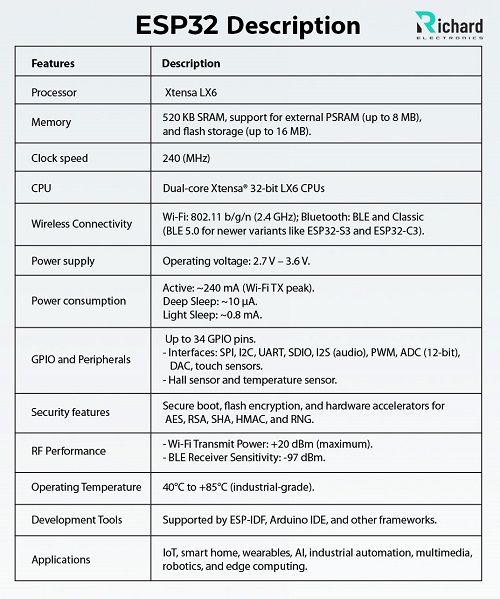
Features | Description |
Processor | Xtensa LX6 |
Memory | 520 KB SRAM, support for external PSRAM (up to 8 MB), and flash storage (up to 16 MB). |
Clock speed | 240 (MHz) |
CPU | Dual-core Xtensa® 32-bit LX6 CPUs |
Wireless Connectivity | Wi-Fi: 802.11 b/g/n (2.4 GHz); Bluetooth: BLE and Classic (BLE 5.0 for newer variants like ESP32-S3 and ESP32-C3). |
Power supply | Operating voltage: 2.7 V – 3.6 V. |
Power consumption | Active: ~240 mA (Wi-Fi TX peak). Deep Sleep: ~10 μA. Light Sleep: ~0.8 mA. |
GPIO and Peripherals | Up to 34 GPIO pins. - Interfaces: SPI, I2C, UART, SDIO, I2S (audio), PWM, ADC (12-bit), DAC, touch sensors. - Hall sensor and temperature sensor. |
Security features | Secure boot, flash encryption, and hardware accelerators for AES, RSA, SHA, HMAC, and RNG. |
RF Performance | - Wi-Fi Transmit Power: +20 dBm (maximum). - BLE Receiver Sensitivity: -97 dBm. |
Operating Temperature | 40°C to +85°C (industrial-grade). |
Physical Dimensions | 18 mm × 25 mm |
Development Tools | Supported by ESP-IDF, Arduino IDE, and other frameworks. |
Applications | IoT, smart home, wearables, AI, industrial automation, multimedia, robotics, and edge computing. |
Variations in ESP32:
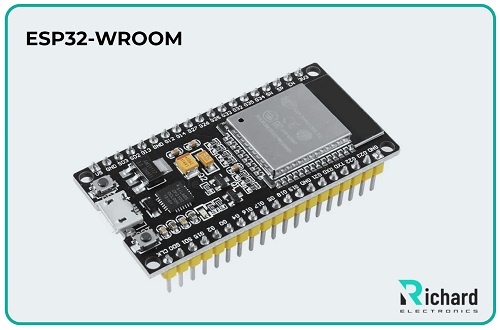
ESP32-WROOM:
● A current module containing 4MB flash memory was a variety of hardware that worked in many ways.
● Primarily, it is crafted for general-purpose applications and prototyping.
● Besides the low resources, this product is specifically instrumented and attuned for medium-level IoT projects.
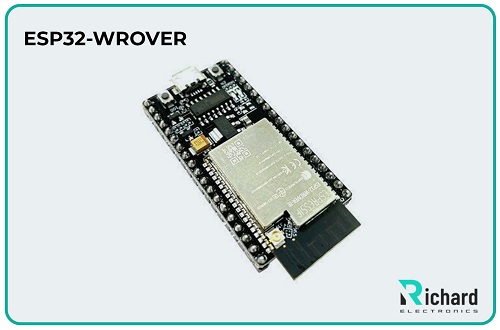
ESP32-WROVER:
● Comes with an outdoor PSRAM, in addition, the use of PSRAM opens up avenues for more memory using data structures that demand it.
● Going best for resource-hungry items such as AI, Multimedia, and IoT complexities.
● It comes with options for expanded memories that can accommodate everything a data-heavy job will produce.
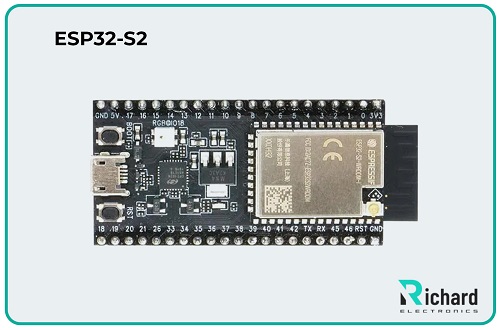
ESP32-S2:
It is the single-core processor that reduces the power consumption of calling the voice of the system, increasing the efficiency of the device. This operating system offers enhanced security features and USB OTG, a secure mechanism for the transfer of data.
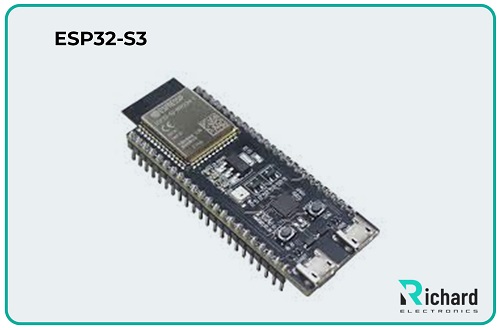
ESP32-S3:
Built for advanced intelligence and multimedia applications, with more computing power.
Implements instruction set for launching machine learning models most effectively. The devices that are mainly associated with this range of applications are smart, voice recognition, and image processing.
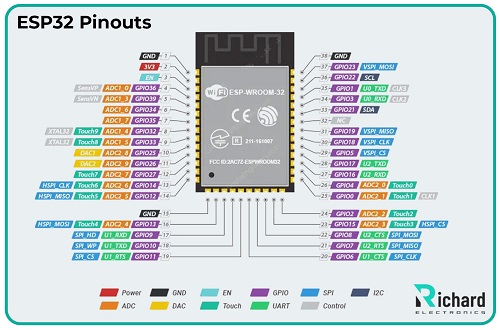
ESP32 Pinouts:
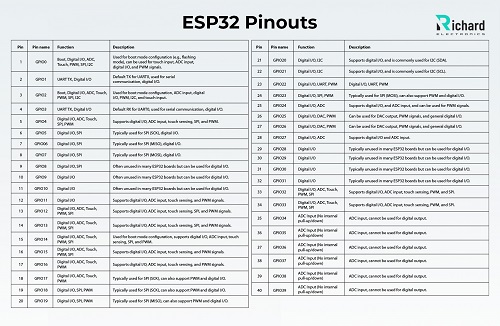
Pins | Pin name | Function | Description |
1 | GPIO0 | Boot, Digital I/O, ADC, Touch, PWM, SPI, I2C | Used for boot mode configuration (e.g., flashing mode), can be used for touch input, ADC input, digital I/O, and PWM signals. |
2 | GPIO1 | UART TX, Digital I/O | Default TX for UART0, used for serial communication, digital I/O. |
3 | GPIO2 | Boot, Digital I/O, ADC, Touch, PWM, SPI, I2C | Used for boot mode configuration, ADC input, digital I/O, PWM, I2C, and touch input. |
4 | GPIO3 | UART TX, Digital I/O | Default RX for UART0, used for serial communication, digital I/O. |
5 | GPIO4 | Digital I/O, ADC, Touch, SPI, PWM | Supports digital I/O, ADC input, touch sensing, SPI, and PWM. |
6 | GPIO5 | Digital I/O, SPI | Typically used for SPI (SCK), digital I/O. |
7 | GPIO06 | Digital I/O, SPI | Typically used for SPI (MISO), digital I/O. |
8 | GPIO7 | Digital I/O, SPI | Typically used for SPI (MOSI), digital I/O. |
9 | GPIO8 | Digital I/O, SPI | Often unused in many ESP32 boards but can be used for digital I/O. |
10 | GPIO9 | Digital I/O | Often unused in many ESP32 boards but can be used for digital I/O. |
11 | GPIO10 | Digital I/O | Often unused in many ESP32 boards but can be used for digital I/O. |
12 | GPIO11 | Digital I/O | Supports digital I/O, ADC input, touch sensing, and PWM signals. |
13 | GPIO12 | Digital I/O, ADC, Touch, PWM, SPI | Supports digital I/O, ADC input, touch sensing, SPI, and PWM signals. |
14 | GPIO13 | Digital I/O, ADC, Touch, PWM, SPI | Supports digital I/O, ADC input, touch sensing, SPI, and PWM signals. |
15 | GPIO14 | Digital I/O, ADC, Touch, PWM, SPI | Used for boot mode configuration, supports digital I/O, ADC input, touch sensing, SPI, and PWM. |
16 | GPIO15 | Digital I/O, ADC, Touch, PWM, SPI | Supports digital I/O, ADC input, touch sensing, and PWM signals. |
17 | GPIO16 | Digital I/O, ADC, Touch, PWM | Supports digital I/O, ADC input, touch sensing, and PWM signals. |
18 | GPIO17 | Digital I/O, ADC, Touch, PWM | Typically used for SPI (SCK), can also support PWM and digital I/O. |
19 | GPIO18 | Digital I/O, SPI, PWM | Typically used for SPI (SCK), can also support PWM and digital I/O. |
20 | GPIO19 | Digital I/O, SPI, PWM | Typically used for SPI (MISO), can also support PWM and digital I/O. |
21 | GPIO20 | Digital I/O, I2C | Supports digital I/O, and is commonly used for I2C (SDA). |
22 | GPIO21 | Digital I/O, I2C | Supports digital I/O, and is commonly used for I2C (SCL). |
23 | GPIO22 | Digital I/O, UART, PWM | Digital I/O, UART, PWM |
24 | GPIO23 | Digital I/O, SPI, PWM | Typically used for SPI (MOSI), can also support PWM and digital I/O. |
25 | GPIO24 | Digital I/O, ADC | Supports digital I/O, and ADC input, and can be used for PWM signals. |
26 | GPIO25 | Digital I/O, DAC, PWM | Can be used for DAC output, PWM signals, and general digital I/O. |
27 | GPIO26 | Digital I/O, DAC, PWM | Can be used for DAC output, PWM signals, and general digital I/O. |
28 | GPIO27 | Digital I/O, ADC | Supports digital I/O and ADC input. |
29 | GPIO28 | Digital I/O | Typically unused in many ESP32 boards but can be used for digital I/O. |
30 | GPIO29 | Digital I/O | Typically unused in many ESP32 boards but can be used for digital I/O. |
31 | GPIO30 | Digital I/O | Typically unused in many ESP32 boards but can be used for digital I/O. |
32 | GPIO31 | Digital I/O | Typically unused in many ESP32 boards but can be used for digital I/O. |
33 | GPIO32 | Digital I/O, ADC, Touch, PWM, SPI | Supports digital I/O, ADC input, touch sensing, PWM, and SPI. |
34 | GPIO33 | Digital I/O, ADC, Touch, PWM, SPI | Supports digital I/O, ADC input, touch sensing, PWM, and SPI. |
35 | GPIO34 | ADC Input (No internal pull-up/down) | ADC input, cannot be used for digital output. |
36 | GPIO35 | ADC Input (No internal pull-up/down) | ADC input, cannot be used for digital output. |
37 | GPIO36 | ADC Input (No internal pull-up/down) | ADC input, cannot be used for digital output. |
38 | GPIO37 | ADC Input (No internal pull-up/down) | ADC input, cannot be used for digital output. |
39 | GPIO38 | ADC Input (No internal pull-up/down) | ADC input, cannot be used for digital output. |
40 | GPIO39 | ADC Input (No internal pull-up/down) | ADC input, cannot be used for digital output. |
Applications:
IoT Projects:
The ESP32 is a commonly used device in IoT projects like smart home automation, environmental monitoring, and smart agriculture. The end only one is that it enables remote control and data collection by Wi-Fi and Bluetooth.
Wearable Devices:
Bluetooth is enabled in the ESP32 which is perfect for fitness trackers, smartwatches, and medical devices, and thus, health metrics like heart rate, steps, and sleep are monitored.
Industrial Automation:
The ESP32 in industries is used for predictive maintenance, factory automation, and environmental monitoring thus, efficiency is increased along with the safety and security of the operations.
Home Security and Smart Lighting:
It is used in smart security systems and smart lighting, providing remote access, automation, and monitoring through mobile apps.
Robotics:
It is used in autonomous robots, drones, and voice-controlled robots, thereby enabling real-time telemetry, control, and autonomous navigation.
Prototyping and Educational Projects:
Along with its low cost and easy use, the ESP32 is widely used for DIY projects, prototyping, and STEM education.
Conclusion:
The ESP32 is an adaptable microcontroller that is famous for its high performance and thus it is used in hobby to industrial systems. With a dual-core processor, built-in Wi-Fi, and Bluetooth, it provides high-quality connectivity and processing of data for IoT applications. The device is designed to be energy efficient and has strong security functions, including secure boot and hardware encryption, thus it is ideal for reliable and secure data transmission.
The ESP32 is a microcontroller that is extensively utilized in home automation, wearable devices, robotics, and industrial automation applications as well as it can support AI and multimedia such as voice recognition and image processing. Its cost-effectiveness, multitudes of peripherals, and open-source software compatibility add up to its value enabling developers the world over to come up with out-of-the-box ideas in the digital age.
Specifications
Technical Specifications
- TypeParameterSelect All
Factory Lead Time
2 Weeks
Mounting Type
Surface Mount
Package / Case
38-SMD Module
Manufacturer Package Identifier
ESP32-WROVER
Operating Temperature
-40°C~85°C
Packaging
Tape & Reel (TR)
Series
ESP32
Part Status
Active
Moisture Sensitivity Level (MSL)
3 (168 Hours)
Voltage - Supply
2.3V~3.6V
Frequency
2.4GHz~2.5GHz
Interface
I2C, I2S, SPI, UART
Memory Size
448kB ROM 536kB SRAM
Nominal Supply Current
80mA
Data Rate
150Mbps
Utilized IC / Part
ESP32-D0WDQ6
Protocol
802.11b/g/n, Bluetooth v4.2 + EDR, Class 1, 2 and 3
Power - Output
20dBm
RF Family/Standard
Bluetooth, WiFi
Antenna Type
PCB Trace
Sensitivity
-98dBm
Number of ADC Channels
16
Serial Interfaces
GPIO, I2C, I2S, PWM, SDIO, SPI, UART
Modulation
CCK, DSSS, OFDM
Number of GPIO
20
Height
3.4mm
RoHS Status
ROHS3 Compliant
View More
- 1.
What is the clock speed of the ESP32 processor?
The ESP32 is powered by an Xtensa LX6 processor with a clock speed of 240 MHz.
- 2.
Does the ESP32 support Bluetooth Low Energy (BLE)?
Yes, it does. The ESP32 supports Bluetooth Low Energy (BLE) and BLE Mesh, allowing multiple devices to form a network, which is energy-efficient for IoT applications.
 Ling Tianhao
Ling Tianhao, with 20 years in R&D, has developed his skills at one of America's top ten chip manufacturers.His expertise goes beyond chip design and quality control, showing a strong understanding of PCB technology. His comprehensive knowledge of microchip and PCB technologies establishes him as a versatile professional in the semiconductor industry, driving advancements and solving complex problems.