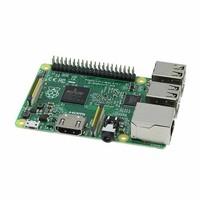
Computer;Open Frame;900Mhz Quad-Core; 1GB RAM;USB;27 GPIO;HDMI;85.6 x 56 x


Hi readers! I hope you are doing well and learning new things daily. Today, we will learn about Raspberry Pi 2, launched in February 2015. It is introduced by the Raspberry Pi Foundation. Their main focus was to make a device that was easily accessible to students and developers for programming.
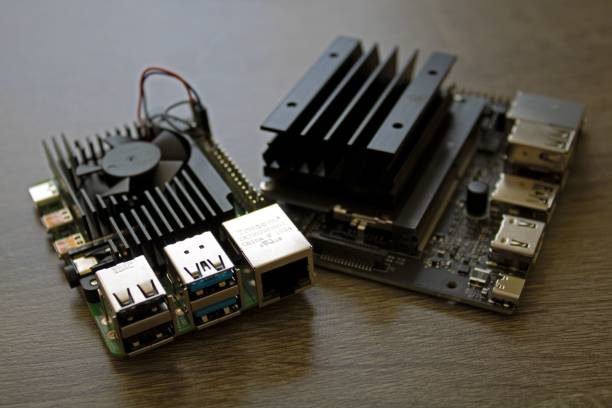
Raspberry Pi 2 - A Basic Overview & Introduction
Introduction
The Raspberry Pi 2 has more processing power and a memory range than Model B+. It can handle more complex and intensive projects and is more efficient. It is highly suitable for students and beginners to learn various computing skills. Pi 2 has more unique and significant features than the previous model, making it ideal for hobbyists, educators, and engineers for different projects. It is used to run modern operating systems, and efficiently perform complex tasks. It can handle multitasks at a time. Pi 2 allows connectivity options for better networking and transfer of data. It consumes low power to operate the system, 3-5 watts depending on workload.
It is compact-sized with dimensions 85.6 mm × 56.5 mm × 17 mm. It can be easily used in portable projects. It has a wide range of applications including education, industrial development, scientific research, media centers, IoT projects, robotics, and web servers.
In this article, we will learn about Pi 2’s introduction, features and specifications, datasheet, pinouts, applications, impact, and limitations. Let’s start.
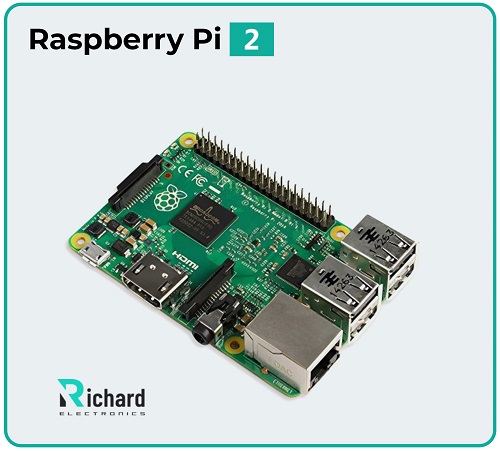
● It uses Broadcom BCM2836 System-on-Chip (SoC) to operate computers.
● Pi 2 has a Quad-core ARM Cortex-A7 CPU.
● It operates at the clock speed of 900 MHz or 1GHz.
● It offers a memory of 1 GB.
● It was launched in February 2015 by the Raspberry Pi Foundation.
● It also contains microSD cards to boost its performance with high efficiency.
● It contains 4 USB 2.0 ports to enhance its efficiency.
● It has a 40-pin GPIO header.
● It is a compact board, having dimensions of 85.6 mm × 56.5 mm × 17 mm.
● It requires 3W to 5W power to function smoothly.
Features:
Processor:
The Raspberry Pi 2 has a Broadcom BCM2836 System-on-Chip (SoC) processor. It runs at a clock speed of 900 MHz.
Quad-Core Design:
Its design has 4 cores which enhances its performance and efficiency. This significant feature makes it perfect for performing multiple tasks at a time, running modern operating systems, and handling resource-intensive applications.
ARMv7 Architecture:
This processor is based on ARMv7 Architecture. This makes it suitable for many software including Ubuntu distribution and Windows 10 IoT Core.
Overclocking Potential:
It allows a clock speed of 900 MHz that can enhanced up to 1 GHz by the developer. This feature significantly increases the processing speed of the applications and software.
GPU:
This board contains VideoCore IV GPU which is capable of giving video playback of 1080p.
It has some features:
1080p Video Playback:
It is capable of handling full HD video playback at 30 frames per second. This makes it crucial in media centers.
OpenGL ES 2.0 Support:
It is efficiently used in many applications including lightweight gaming and the formation of 3D graphics.
Broad Multimedia Compatibility:
It supports the playback of multimedia content smoothly. It is highly used for decoding audio formats such as H.264 and videos.
Memory:
The Raspberry Pi 2 has 1 GB RAM of LPDDR2 SDRAM. The enhanced memory allows to to perform multitasks, LXDE in Raspbian OS more smoothly and efficiently. Its spacious memory allows it to handle complex and intensive applications with high efficiency. It is ideal for large databases, web servers, or game emulation.
MicroSD Card Slot:
The Raspberry Pi 2 supports a microSD card slot to improve the storage capacity of the device. It has the following features:
High-Speed Support:
This slot enhances boot times and file access with Class 10 or UHS cards. It allows microSDHC and microSDXC cards for better performance.
Expandable Capacity:
The option of a card slot improved Pi 2 abilities and can be easily used in many applications and projects to handle intense data.
Connectivity:
The Raspberry Pi 2 offers many flexible connectivity ports to connect various peripheral devices.
USB port:
It has four USB ports that are used to connect peripheral devices like keyboards, mice, external storage devices, and Wi-Fi adapters.
Power Supply for Devices:
The low-power USB devices are powered by using these ports. It is perfect for applications that require external power.
Ethernet Port:
Pi 2 board offers an onboard 10/100 Mbps Ethernet port. It is used for wired internet connections.
HDMI Port:
It has an HDMI port that makes Pi 2 compatible with modern monitors and TVs by allowing resolutions up to 1920x1200.
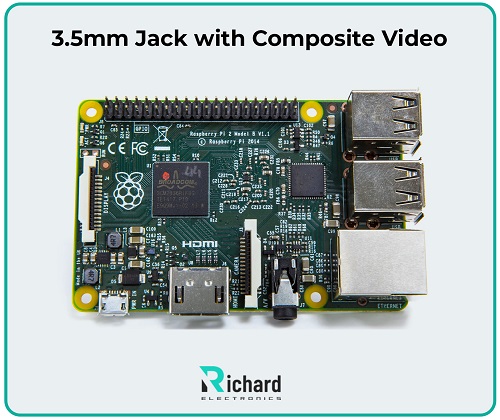
3.5mm Jack with Composite Video:
It allows analog video output only when connected to an audio and composite video jack. For headsets and external speakers, it contains stereo audio output.
Raspberry Pi 2 GPIO Pins:
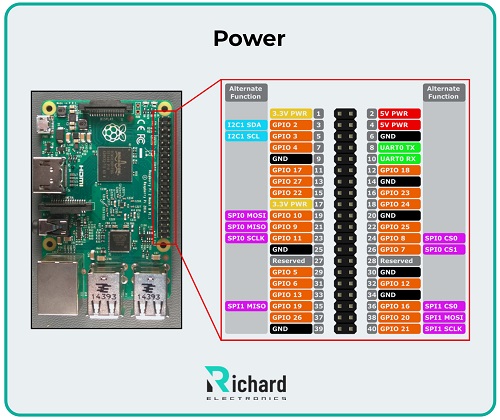
Pi 2 has 40 GPIO pins that allow flexibility and high performance. These pins are used to connect external hardware, sensors, and devices.
Digital I/O Capabilities:
Digital input-output pins are used in applications to control LEDs, motors, and relays or to read signals from buttons and switches.
I2C, SPI, and UART Interfaces:
They are communication protocols. They are used in various applications including sensors, actuators, and modules, such as temperature sensors, displays, and GPS units.
Customization with HATs:
It is used to attach hardware in applications like motor controllers or environmental sensors. It can also be connected to the GPIO header to improve functionality.
Power:
A Micro-USB connector is used to power Pi 2. It has the following unique features:
5V/2A Power Supply: it uses a high-quality 5V, 2A power adapter for smooth and stable performance, via multiple USB peripherals.
Low Power Consumption: it consumes 3 to 5 watts to perform function efficiently. This makes it perfect for portable and battery-based projects.
Dimensions:
The Raspberry Pi 2 is 85.6 mm × 56.5 mm × 17 mm in size. It weighs 46g approximately. Its small size makes it ideal for portable projects and wearable technology.
● Mounting holes: it has four mounting holes that allow the user to easily attach it to the project surface or fabric.
Camera and Display Interfaces:
Camera Serial Interface (CSI):
It is used to connect camera modules to enhance its performance. It is perfect for projects that require photography, video recording, or computer vision with efficient results.
Display Serial Interface (DSI):
This is used to connect Raspberry Pi touchscreens or other compatible display panels for interactive projects.
Software Compatibility:
Pi 2’s processor makes it efficient for various software and operating systems including Raspbian (now Raspberry Pi OS, Ubuntu MATE, Windows 10 IoT Core, RetroPie, and other distributions like Arch Linux, Kali Linux, and OpenELEC for specialized use cases.
Datasheet of Raspberry Pi 2:
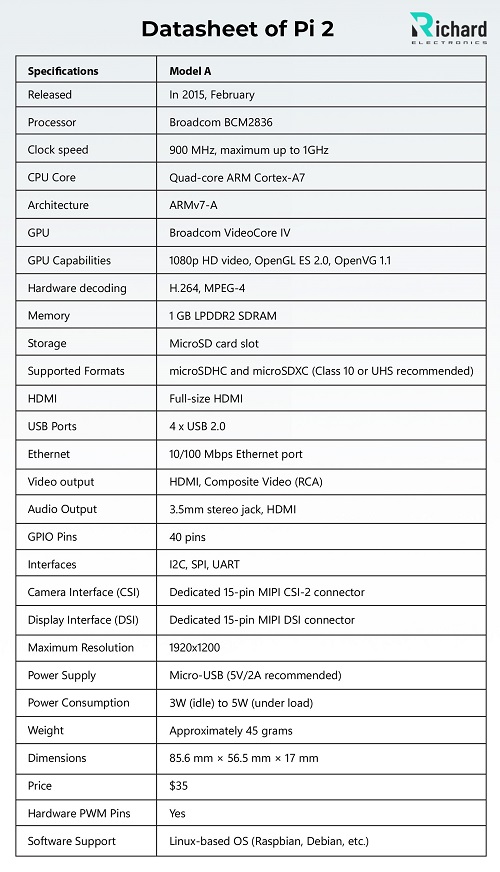
Specifications | Model A |
Released | In 2015, February |
Processor | Broadcom BCM2836 |
Clock speed | 900 MHz, maximum up to 1GHz |
CPU Core | Quad-core ARM Cortex-A7 |
Architecture | ARMv7-A |
GPU | Broadcom VideoCore IV |
GPU Capabilities | 1080p HD video, OpenGL ES 2.0, OpenVG 1.1 |
Hardware decoding | H.264, MPEG-4 |
Memory | 1 GB LPDDR2 SDRAM |
Storage | MicroSD card slot |
Supported Formats | microSDHC and microSDXC (Class 10 or UHS recommended) |
HDMI | Full-size HDMI |
USB Ports | 4 x USB 2.0 |
Ethernet | 10/100 Mbps Ethernet port |
Video output | HDMI, Composite Video (RCA) |
Audio Output | 3.5mm stereo jack, HDMI |
GPIO Pins | 40 pins |
Interfaces | I2C, SPI, UART |
Camera Interface (CSI) | Dedicated 15-pin MIPI CSI-2 connector |
Display Interface (DSI) | Dedicated 15-pin MIPI DSI connector |
Maximum Resolution | 1920x1200 |
Power Supply | Micro-USB (5V/2A recommended) |
Power Consumption | 3W (idle) to 5W (under load) |
Weight | Approximately 45 grams |
Dimensions | 85.6 mm × 56.5 mm × 17 mm |
Price | $35 |
Hardware PWM Pins | Yes |
Software Support | Linux-based OS (Raspbian, Debian, etc.) |
Pinouts of Raspberry Pi 2:
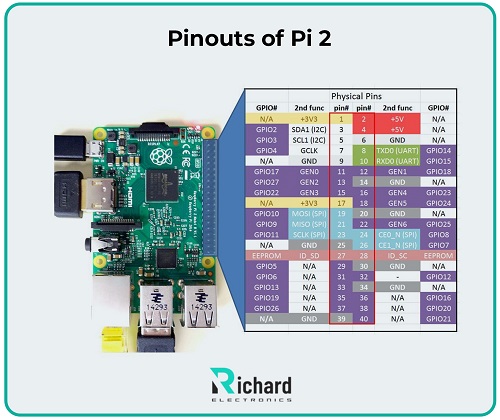
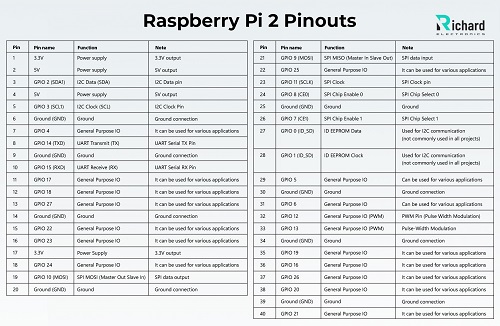
Pin | Pin name | Function | Note |
1 | 3.3V | Power supply | 3.3V output |
2 | 5V | Power supply | 5V output |
3 | GPIO 2 (SDA1) | I2C Data (SDA) | I2C Data pin |
4 | 5V | Power supply | 5V output |
5 | GPIO 3 (SCL1) | I2C Clock (SCL) | I2C Clock Pin |
6 | Ground (GND) | Ground | Ground connection |
7 | GPIO 4 | General Purpose IO | It can be used for various applications |
8 | GPIO 14 (TXD) | UART Transmit (TX) | UART Serial TX Pin |
9 | Ground (GND) | Ground | Ground connection |
10 | GPIO 15 (RXD) | UART Receive (RX) | UART Serial RX Pin |
11 | GPIO 17 | General Purpose IO | It can be used for various applications |
12 | GPIO 18 | General Purpose IO | It can be used for various applications |
13 | GPIO 27 | General Purpose IO | It can be used for various applications |
14 | Ground (GND) | Ground | Ground connection |
15 | GPIO 22 | General Purpose IO | It can be used for various applications |
16 | GPIO 23 | General Purpose IO | It can be used for various applications |
17 | 3.3V | Power Supply | 3.3V output |
18 | GPIO 24 | General Purpose IO | It can be used for various applications |
19 | GPIO 10 (MOSI) | SPI MOSI (Master Out Slave In) | SPI data output |
20 | Ground (GND) | Ground | Ground connection |
21 | GPIO 9 (MOSI) | SPI MISO (Master In Slave Out) | SPI data input |
22 | GPIO 25 | General Purpose IO | It can be used for various applications |
23 | GPIO 11 (SCLK) | SPI Clock | SPI Clock pin |
24 | GPIO 8 (CE0) | SPI Chip Enable 0 | SPI Chip Select 0 |
25 | Ground (GND) | Ground | Ground |
26 | GPIO 7 (CE1) | SPI Chip Enable 1 | SPI Chip Select 1 |
27 | GPIO 0 (ID_SD) | ID EEPROM Data | Used for I2C communication (not commonly used in all projects) |
28 | GPIO 1 (ID_SD) | ID EEPROM Clock | Used for I2C communication (not commonly used in all projects) |
29 | GPIO 5 | General Purpose IO | Can be used for various applications |
30 | Ground (GND) | Ground | Ground connection |
31 | GPIO 6 | General Purpose IO | Can be used for various applications |
32 | GPIO 12 | General Purpose IO (PWM) | PWM Pin (Pulse Width Modulation) |
33 | GPIO 13 | General Purpose IO (PWM)
| Pulse-Width Modulation |
34 | Ground (GND) | Ground | Ground connection |
35 | GPIO 19 | General Purpose IO | It can be used for various applications |
36 | GPIO 16 | General Purpose IO | It can be used for various applications |
37 | GPIO 26 | General Purpose IO | It can be used for various applications |
38 | GPIO 20 | General Purpose IO | It can be used for various applications |
39 | Ground (GND) | Ground | Ground connection |
40 | GPIO 21 | General Purpose IO | It can be used for various applications |
Raspberry Pi 2 Applications:
Education and Learning:
It is specially designed for students to learn programming and coding. It is a perfect tool to learn programming in various languages including Python, Scratch, C++, and Java.
Electronics and Robotics:
Pi 2 has flexible GPIO pins that support hardware-software interactions with students. These features make them best suited for many applications including building robots, LED displays, and sensor-based systems.
Media Center:
● It has applications in streaming devices using platforms like Plex or VLC. It is also compatible with Netflix, Spotify, and YouTube.
IoT Projects:
Pi 2 is simple and has many applications in home automated devices to control lights and security systems. It is used with sensors to collect data like temperature, humidity, and air quality.
Home Automation:
It has many applications in home automation like smart home devices, including lights, thermostats, and security cameras.
Retro Gaming:
It is used as a retro gaming console.
Web Server:
It is compatible with software like Apache or Nginx as a web server to host personal websites or blogs. It helps students to deploy websites using PHP, HTML, and CSS.
Conclusion:
The Raspberry Pi 2 is cost-affective, and small in size. Its processor can process data at a fast speed with high precision. Its enhanced memory 1 GB LPDDR2 SDRAM is used to handle large and intensive applications. It allows programming and coding with high accuracy. It also supports a microSD card slot to improve its storage capacity. It requires 3W to 5W power to function smoothly and runs lightweight web servers.
Pi 2 supports network connectivity and has USB ports to enhance its performance. It has 40 GPIO pins that allow flexibility to perform operations. It has a wide range of applications in various fields including education, industrial development, scientific research, media centers, IoT projects, retro gaming, robotics, and web servers.
Specifications
Technical Specifications
- TypeParameterSelect All
Factory Lead Time
3 Weeks
Mounting Type
Fixed
Published
2014
Part Status
Active
Moisture Sensitivity Level (MSL)
Not Applicable
Type
MPU
Core Processor
ARM® Cortex®-A7, VideoCore
Utilized IC / Part
BCM2836
Contents
Board(s)
Board Type
Single Board Computers (SBC)
Platform
Raspberry Pi 2 Model B
RoHS Status
Non-RoHS Compliant
Datasheet PDF
- 1.
What is the processor of Raspberry Pi 2?
It uses a Broadcom BCM2836 processor with a Quad-core ARM Cortex - A7 CPU running at 900 MHz (up to 1 GHz).
- 2.
What kind of storage does it have?
It has a MicroSD card slot that supports microSDHC and microSDXC (Class 10 or UHS recommended).
- 3.
What are the connectivity options?
It has 4 USB 2.0 ports, a 10/100 Mbps Ethernet port, an HDMI port, a 3.5mm stereo jack, and 40 GPIO pins with I2C, SPI, UART interfaces, a Camera Interface (CSI), and a Display Interface (DSI).
View More
 Ling Tianhao
Ling Tianhao, with 20 years in R&D, has developed his skills at one of America's top ten chip manufacturers.His expertise goes beyond chip design and quality control, showing a strong understanding of PCB technology. His comprehensive knowledge of microchip and PCB technologies establishes him as a versatile professional in the semiconductor industry, driving advancements and solving complex problems.