

They do hard math fast, saving time and mistakes. Engineers use them to make transformers better. This helps power move well and keeps signals strong. Smart algorithms like Particle Swarm Optimization make these tools even better. They let you change circuits to fit what you need. Learning these tools helps you make circuits more accurate and efficient. They are very useful in today's electrical engineering.
Key Takeaways
Reactance calculators make hard math easy. They find impedance fast.
Knowing inductive and capacitive reactance helps you design better circuits.
Always double-check your numbers and units to prevent errors.
Matching impedance helps circuits work well and lowers signal loss.
Use reactance calculators often to get better at circuit design.
Understanding Reactance and Its Role in Circuits
Inductive Reactance and Its Calculation
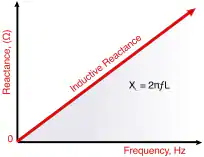
Inductive reactance happens when a coil blocks AC flow. This blocking depends on the AC frequency and the coil's inductance. You can find inductive reactance using this formula:
X_L = 2πfL
Here, X_L means inductive reactance, f is frequency in Hertz, and L is inductance in Henrys. Higher frequency or bigger inductance makes reactance larger.
Look at these examples for better understanding:
| Formula/Example | What It Does |
|---|---|
| X_L = V_{max} / I_{max} | Finds inductive reactance in a fully inductive circuit. |
| L = X_L / (2πf) | Changes the formula to calculate inductance from reactance and frequency. |
By learning these, you can predict how coils act in circuits and improve designs.
Capacitive Reactance and Its Calculation
Capacitive reactance happens when a capacitor blocks AC flow. Unlike inductors, capacitors block less as frequency rises. The formula for capacitive reactance is:
X_C = 1 / (2πfC)
In this formula, X_C is capacitive reactance, f is frequency, and C is capacitance in Farads. Capacitors act differently at extreme frequencies. At high frequencies, reactance becomes almost zero, like a short circuit. At low frequencies, it becomes very high, like an open circuit.
Here’s a simple guide:
| Parameter | What It Means |
|---|---|
| Capacitive Reactance (Xc) | Gets smaller as frequency or capacitance gets bigger. |
| Formula | Xc = 1 / (2πfC) |
| Behavior at Frequency Limits | Xc is nearly zero at high frequencies and very large at low frequencies. |
For instance, a 0.0039 µF capacitor has 33 kΩ reactance at 1.24 kHz. This helps you pick the right capacitors for your circuits.
The Connection Between Reactance and Impedance
Reactance is key to finding impedance. Impedance shows how a circuit resists AC flow. The formula for impedance is:
|Z| = √(R² + X²)
Here, |Z| is impedance, R is resistance, and X is reactance. Reactance adds an imaginary part to impedance, causing voltage and current to shift. Total reactance combines inductive (X_L) and capacitive (X_C) reactance, affecting impedance.
Knowing this helps you design circuits with exact impedance. This ensures better performance. For example, matching impedance in AC circuits reduces power loss and boosts efficiency.
How to Use Reactance Calculator Tools
Input Parameters for Accurate Results
To get correct results, enter the right details in the reactance calculator. First, choose the circuit type. This helps the tool work properly for your circuit. If the circuit has bundles, add the bundle details carefully. Include transmission line details like resistance and reactance. These numbers are important for accurate impedance results.
Wrong input values can cause mistakes in power systems. For example, incorrect transmission line details can mess up control systems or protection tools. Always check the transmission line setup and set a confidence level. This reduces mistakes and gives better impedance results.
Step-by-Step Guide to Calculate Impedance
Follow these steps to find impedance with a reactance calculator:
Know impedance, shown as Z, measured in Ohms (Ω).
Decide if you need inductive or capacitive reactance.
Use this formula for inductive reactance: XL = 2πƒL.
For capacitive reactance, use this formula: XC = 1 / (2πƒC).
Combine resistance (R) and reactance (X) to find impedance:
|Z| = √(R² + X²)
For example, a circuit with 10 microfarads at 1 kHz has about 15.9 Ω capacitive reactance. These steps make finding impedance easier and more accurate.
Interpreting Results to Determine the Impedance
To understand results, know the limits of the reactance calculator. Some tools don’t explain their models, which can confuse users. For example, some calculators use lumped element models. These may not show wave effects in fast circuits.
Compare results with better formulas for accuracy. For instance, Wheeler's equations are more precise than IPC-2141 models, with less than 0.7% error. Check the frequency range too. Many tools only work well at low frequencies, where via impedance matters less.
By knowing these limits, you can trust the results and use them in your designs. This ensures the impedance matches how the circuit actually works.
Practical Uses of Reactance Calculator Tools
Designing and Improving RLC Circuits
Reactance calculators help design and improve RLC circuits. These circuits use resistors, inductors, and capacitors to control impedance. With these tools, you can find each part's reactance and total impedance. This helps create circuits for specific needs, like handling high-frequency signals.
For example, when making a filter circuit, adjust inductance and capacitance. This blocks unwanted frequencies but keeps the signal clear. The tools let you test setups fast, saving time and boosting efficiency.
Matching Impedance in AC Circuits
Matching impedance is key for good power transfer and clear signals. Reactance calculators help match circuit impedance to the source or load. This lowers signal loss and stops signal reflections.
Use these tools to find the impedance of a trace or line. Change component reactance to control impedance and make the circuit work well. This is vital for audio systems or RF circuits where signal quality matters.
Fixing Circuit Problems
If a circuit isn’t working right, reactance calculators can help. They analyze impedance to find issues like mismatched parts or wrong reactance.
For example, if a signal is distorted, check if impedance is correct. Adjust it to fix the circuit and improve performance. These tools are great for keeping signals clear and circuits reliable.
Tips for Accurate Calculations with Reactance Calculator Tools
Check Input Values and Units Twice
Good results need correct inputs. Always check the numbers you enter, like current, resistance, and impedance. Make sure they match your circuit's needs. Mistakes in data can give wrong answers. Follow these steps for better results:
Ensure current and impedance match your circuit or transformer.
Use trusted tools to measure and calculate values.
Adjust inputs if the load changes during normal use.
Using the right units is also important. For example, impedance should be in Ohms (Ω), and capacitance in Farads. Wrong units can cause errors. The table below shows why verified inputs matter:
| Level | What It Means |
|---|---|
| 1 | Inputs from active markets for identical items. |
| 2 | Inputs from other sources, either direct or indirect. |
| 3 | Inputs based on your own data or estimates. |
By using accurate and consistent inputs, you can trust your calculator's results.
Know Tool Limits and Assumptions
Reactance calculators make hard math easier, but they have limits. You should know how the tool works and its assumptions. For example, some tools use lumped models. These might not work well for high-frequency circuits. This can cause wrong impedance results.
Also, many tools are made for certain frequency ranges. If your circuit works outside these ranges, results may not match real-life performance. For instance, tools for low frequencies may fail with high-frequency circuits.
To avoid problems, read the tool's guide. Check if it uses methods based on electromagnetic field theory. Knowing this helps you use the tool better for your projects.
Double-Check Results with Manual Math
Even great tools can make mistakes. Checking results with manual math ensures they are correct. Start with these basic formulas for reactance:
XL = 2πƒL
XC = 1 / (2πƒC)
Then, combine these with resistance to find impedance:
|Z| = √(R² + X²)
Compare your manual math with the tool's results. If they don’t match, check your inputs and the tool's settings. This process improves accuracy and helps you learn more about reactance and impedance.
By following these tips, you can use reactance calculators confidently to build better circuits and fix problems.
Reactance calculators are important for studying and designing circuits. They make hard math easier and help find impedance accurately. Learning to use these tools improves your circuit designs.
Knowing reactance and how it links to impedance is key. It helps you guess how parts will act and improve designs. These skills are useful for fixing problems and making circuits work better.
Use these tools often to get better at them. Knowing their features and limits makes you faster and more confident. With practice, you can calculate impedance well and create great circuits.


