

Surface Mount Technology can only be used by SMD. The term SMD stands for Surface Mount Device. Surface Mount Technology can only be used by SMD. The SMT was produced to fulfill the demand for printed circuit boards called PCB producers to get the fastest as well as small in size, equally efficient, and much less expensive. Through-hole resistors are bigger than the SMDs and without wires that go through the PCB, pads soldered with the terminations at the board's surface. This excludes the need for holes in the board so both sides of the board can be utilized.
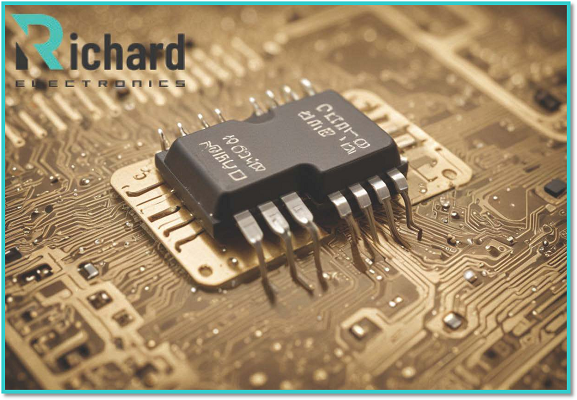
Construction:
SMDs are constructed by adding end electrode bases connected with the ceramic base material. After that resistor is fired for surety of electrons present in the place. Later, a resistive material film is added and the resistor is fired again. A protection covering is made on the dry resistor between the applications. The layers protect it from mechanical damage and the addition of moisture with other particles. At last, if the surface is large a resistor is marked. These resistors are packed in the form of blister rolls to use them as pick-and-drop equipment.
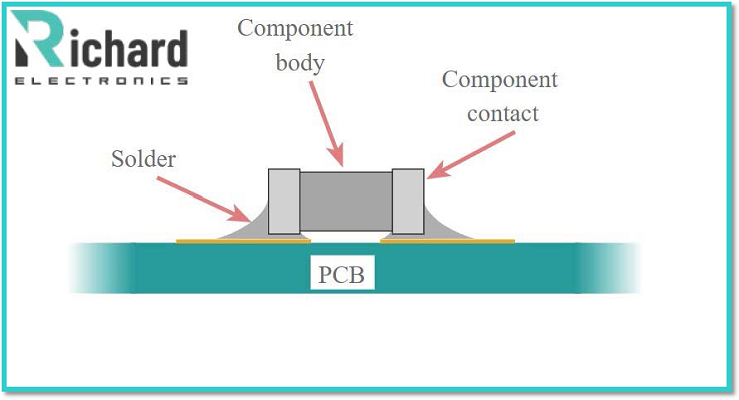

Construction of SMD Resistor
SMD Resistor Applications and Benefits
In an electronic circuit, SMD resistors control the set bias points, current flow, and divide voltages. The electrical properties of SMDs are low parasitic capacitance and inductance which makes them best for maximum frequency applications.
In a comparison of through-hole resistors, the best performances are presented by the SMDs in the case of reliability and thermal management in compact and tightly packed circuit designs.
The applications of SMD resistors are discussed below:
· Design of laptops, smartphones, and many other movable devices for which weight and space are critical factors.
· These are used in many control modules and to confirm the reliable performance, of sensor addition in the automotive industry.
· SMD resistors are also beneficial in medical devices because of their accuracy and stability.
SMD resistors help in analyzing the space in PCB designs as well, so these have several benefits such as:
· In high-frequency circuits, they have comparatively better performance
· Lesser production price because in tough environments, automation compatibility enhances the reliability
· Their capability to be tied into small spaces without affecting performance makes them unique in the industry.
Limitations of SMD Resistors Due to Their Size
While we have many advantages of SMD Resistor, there are disadvantages too which are discussed below:
· They can not be easily handled manually as they are very small in size
· Robotic handling may be involved as prototyping gets very difficult
· As compared to the through-hole resistor, their power tolerance
In electronic design, the size of the resistor is very important for reliability and performance. It affects many basic parameters, so choosing the right size is very important.
Technical Impacts of Resistor Size
· Impedance - Resistors that are smaller in size have less parasitic capacitance and inductance, important for higher-frequency applications, and cause a little distortion in the signal.
· Inductance - Inductive properties are affected by physical dimensions. Smaller resistors have lower inductance, applicable for high-speed circuits with critical integrity in speed.
· Thermal Resistance – The size of the resistor impacts the heat dissipation. The larger size resistor dissipates more heat, protects from overheating, and surety of reliability in power applications.
Impact of SMD Resistor Size on PCB Design
As SMD resistors are attached to a PCB, their size directly impacts the design. Below are some important parameters where PCB design is affected by SMD resistor size.
· Circuit Compactness - The smaller size of the SMD resistor for example 0201 or 0402 allows for a larger density component and provides a more compact design of PCB. The object is specifically advantageous in applications at the point where space is restricted, for example, wearables and mobile devices.
· Trace Routing - SMD resistors that are smaller in size provide more space for routing traces, beneficiary to designing complex circuits.
· Noise - The resistor size and type also affect the noise performance. Slim film resistors usually provide better noise that are important in analog circuits.
· Mechanical Robustness - The resistors larger in size are more mechanically robust as compared to the smaller ones as smaller resistors can be easily damaged during soldering.
· Component Cost – There is a slight difference in cost between different sizes but they are the cost difference is minor if we compare them from the overall effect on the design of PCB and assembly.
Technological Advancements in SMD Resistors
I. Recent Innovations in SMD Resistors
The production of Surface Mount Devices (SMD) resistors in recent years has seen so important in technological advancements. These are done by the demand of industry that is required for more reliable, compact, components of high performance that are suitable for modern electronic applications.
II. Use of Advanced Materials
The use of the latest materials for example greater stability metal films and ceramics are the basic unit for the improvement in the industry of SMD resistor technology. These help to improve the reliability and performance of SMD resistors.
These products provide more resistance stability for a huge range of operating conditions and temperatures. For example, the temperature coefficient resistance (TCR) is specifically reduced by the slim film materials and they provide better performance in temperature-sensitive products.
III. Improved Manufacturing Processes
Improvement in manufacturing processes has played an important role. Improved fabrication processes, for example, slim film deposition and laser trimming, played a more precise part in the industry. Moreover, these techniques played a role in optimizing the size of SMDs to promote PCB miniaturization.
However, these improvements have provided resistors with better resistance tolerance, lesser TCR, and greater power ratings that make them beneficial for various applications. Laser trimming enables manufacturers to get precise resistance values by selectively reducing material from the resistor, providing better performance and strict tolerance.
IV. Enhanced Performance Matrices
The recent advancements in SMD resistor technology have notably improved basic performance metrics e.g. temperature coefficient, power rating, and resistance tolerance.
· Resistance Tolerance - Strict resistance tolerance was a challenge due to restrictions in manufacturing precision. SMD resistors offered tolerance of ±1% to ±5%. However, the latest improvement in slim film technology and laser trimming has made manufacturers to develop resistors with much strict tolerance.
· Temperature coefficient of Resistance (TCR) - The value of the Temperature coefficient of Resistance (TCR) provides much stability in temperature variations. Generally, SMD resistors had TCR values from ±100 ppm/°C to ±200 ppm/°C. With the evolution of new materials and new manufacturing techniques, the latest resistors can achieve a TCR value lower than ±10 ppm/°C. This development makes the performance and reliability of resistors better in environments with varying temperatures for example in aerospace and automotive applications where stable performance is important even through environmental changes.
· Power Rating - SMD resistors had the power rating range from 0.125W to 0.25W. While the latest SMD resistors now have a power rating of up to 0.5W or more. This higher power rating allows resistors to control power failure, which makes them more reliable for higher-power applications in consumer and industrial electronics. For the moment, in motor controllers, power supply circuits and higher power ratings are necessary for the prevention of overheating and reliability.
Practical Applications of Advanced SMD Resistors
I. Optimizing Circuit Design with SMD Resistors
Improvements in SMD resistor technology help manufacturers analyze circuit designs for advanced performance, efficiency, and reliability. These resistors are important in several fields which provide accurate resistance value, better thermal management, and higher power handling ability.
II. Automotive Industry
· Engine Control Units (ECUs) - Latest Engine Control Units require accurate control over engine parameters. The latest SMD resistors with strict resistance tolerance and less TCR enable accurate sensor value and consistent performance across several temperatures.
Example: Vishay Dale CRCW-IF series with ±0.1% tolerance and ±15 ppm/°C TCR.
· Infotainment Systems - Another benefit of SMD resistors is high-performance video and audio systems in vehicles that provide less noise and greater stability
Example: Panasonic ERJ resistors in series for signal settings having power ratings up to 0.5W
III. Telecommunication
· Base Stations - Components that control greater power and stability are required in telecommunication base stations. The latest SMD resistors with greater power ratings are necessary in these applications.
Example: Ohmite LVK series in the greater power SMD provides up to 1W power rating.
· Networking Equipment - Switches and Routers use SMD resistors for noise reduction and signal integrity.
IV. Consumer Electronics
· Smartphones - The complex and luxurious smartphone design depends on SMD resistors for less space and power management.
Example: iPhone RC series with complex sizes and greater dependency on power regulation circuits.
· Wearable Devices - These need more capable components that provide accuracy and durability. SMD resistors are best in these complex designs
Example: Yageo RC0402 series, displaying small dimensions and greater accuracy that are best for smartwatches and fitness trackers.
Considerations and Challenges with SMD Resistor Sizes
Manufacturers usually face many technical challenges while working with sizes of SMD resistors. Keeping in view these challenges their solution is a basic element for their better performance and reliability.
I. Placement Accuracy
Getting the accurate placement of SMD resistors on PCBs (printed circuit boards) is very crucial. Precise placement secures the electrical connectivity and stops short circuits. Its manual placement was clear for errors, but the latest automated pick and placed machines have enhanced the accuracy.
· Solution - Usage of higher accuracy pick and drop machines and accurate calibration. Impose quality control checks to establish the right component orientation and adjustment.
· Best Practice – Fiducial markers may be used on PCBs to indicate placement machines and improve accuracy.
II. Thermal Management
In higher power applications, management of heat dissipation is necessary to control the performance and life of SMD resistors. Before improvements, component failure and lesser lifespan were common due to poor thermal management. Now, innovations in materials and designs have evolved heat dissipation.
· Solution - PCBs must be designed with enough flexibility in thermal and the material used must be in higher thermal conductivity.
· Best Practice - During the design phase, thermal simulations must be conducted so that the optimization may be identified.
III. Solder Joint Reliability
For the resilience of SMD resistors, reliable joints of solder are essential. Weak solder joints can result in electrical disconnection and mechanical failure. Improvement in solder paste material has enhanced the reliability.
· Solution - The selection of good quality solder paste can increase the reliability of the soldering process. Usage of a suitable design of pad can ensure the solder joints.
· Best Practice - Inspection techniques may be implemented for example X-ray and Automated Optical Inspection (AOI) to find defects in solder joints
IV. Minimizing Parasitic Effects
The performance of SMD resistors can be affected by the parasitic inductance and capacitance, especially in higher frequency applications.
· Solution - To lessen the inductance, design with lesser and wider traces and initiate proper grounding techniques. Coupling effects can be minimized by carefully selecting the resistor placement.
· Best Practice - During the design phase, an electromagnetic compatibility (EMC) test may be performed to find and reduce parasitic effects.
V. Quality and Reliability Issues
For an electronic design, while selecting the SMD resistors Quality and reliability are critical considerations. These parts must play consistently positive roles in various conditions to indicate the reliability and long life of the complete system.
VI. Failure Modes and Lifespan
Generally, SMD resistors are effective but they can lose because of several reasons including:
· Thermal Stress - Degradation is caused by performance failing by high temperature.
· Mechanical Stress - Cracking and detachment of the resistors from the PCBs is caused by excessive vibration.
· Environmental Factors - Corrosion and humidity result in oxidation that minimizes the lifetime and performance of SMD resistors.
Conclusions
In this article we have discussed the importance of the sizes of SMD resistors, knowing their effect on the circuit design, the latest advancements in technology, and practical usage across various industries. The importance of determining the suitable SMD resistor size can’t be neglected as it directly affects the improvement of electronic devices in higher frequency, power-sensitive, and compact environments.
ALSO SEE:All Online Conversion Calculators by Richard


