Choosing the right car battery can feel overwhelming, especially when faced with similar-sounding options like H6 and H7 batteries. If you've ever stood in an auto parts store wondering whether that extra inch of length or 100 cold cranking amps really matters, you're not alone. These two popular battery sizes power millions of vehicles worldwide, yet many car owners remain confused about which one their vehicle truly needs.
The stakes are higher than you might think. Install the wrong battery, and you could face premature failure, poor performance in extreme weather, or even damage to your vehicle's electrical system. Both H6 (Group 48) and H7 (Group 94R) batteries serve modern vehicles, but they're engineered for different electrical demands and physical spaces.
"The difference between H6 and H7 isn't just about size—it's about matching your vehicle's power requirements and ensuring reliable performance when you need it most."
In this comprehensive guide, we'll decode the technical specifications, compare real-world performance, and help you make an informed decision. Whether you drive a compact sedan, a luxury SUV, or a work truck, understanding these batteries will save you money and prevent roadside headaches.
Understanding H6 and H7 Battery Designations
What Do These Numbers Actually Mean?
The H6 and H7 designations come from the DIN (Deutsches Institut für Normung) standardization system, which originated in Europe but has become widely adopted globally. In North America, these batteries also correspond to BCI (Battery Council International) group sizes—H6 equals Group 48, while H7 equals Group 94R.
The "R" in Group 94R stands for "reverse terminal configuration," meaning the positive terminal sits on the right side when viewing the battery from the front. This seemingly small detail is crucial for proper installation—using the wrong orientation can result in cables that don't reach or, worse, incorrect polarity connections.
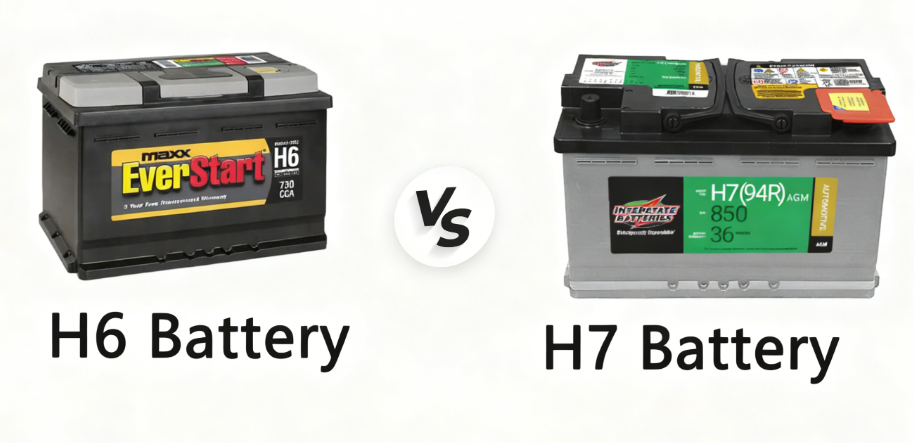
Key Specification Comparison
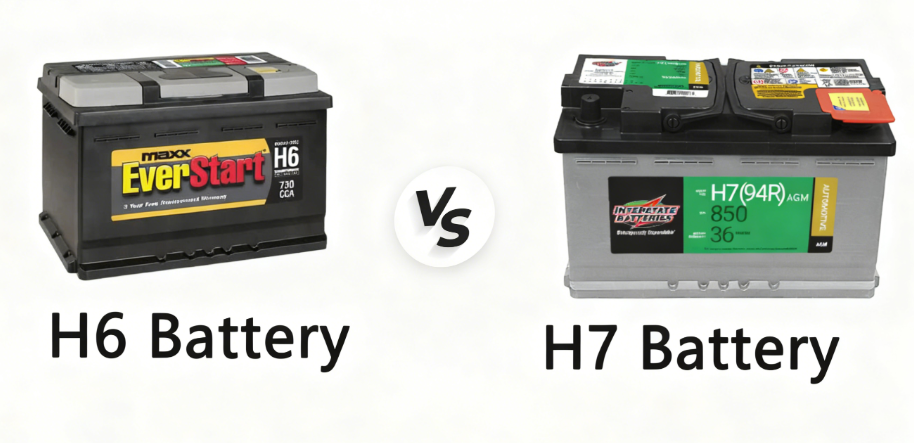
| Feature | H6 (Group 48) | H7 (Group 94R) |
|---|---|---|
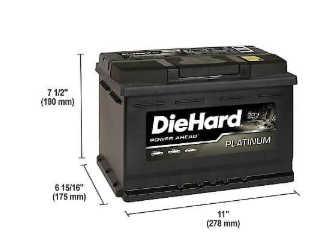
| Dimensions (L×W×H) | 278 × 175 × 190 mm (10.9" × 6.9" × 7.5") | 315 × 175 × 190 mm (12.4" × 6.9" × 7.5") |
| Weight Range | 45-50 lbs (20-23 kg) | 51-57 lbs (23-26 kg) |
| Cold Cranking Amps (CCA) | 600-800 amps | 750-950 amps |
| Reserve Capacity | 100-120 minutes | 130-160 minutes |
| Amp-Hour Capacity | 60-70 Ah | 76-80 Ah |
| Price Range (AGM) | $180-$250 | $200-$300 |
The Critical Differences: More Than Just Size
1. Physical Dimensions and Fitment
The most obvious difference is length. The H7 battery is approximately 1.5 inches (37mm) longer than the H6. While width and height remain identical, this extra length translates to additional cell capacity and power output.
Installation Reality Check: Many vehicle battery trays are designed specifically for one size. The H6 will leave extra space in an H7 tray (requiring spacers), while the H7 simply won't fit in an H6 compartment without modifications. Some Jeep Wrangler owners report removing battery tray spacers to accommodate the larger H7, but this isn't officially recommended.
2. Power Output and Performance
The additional cells in the H7 battery deliver tangible performance benefits:
Cold Cranking Amps (CCA): H7 batteries typically provide 150-200 more CCAs, crucial for cold-weather starts and high-displacement engines
Reserve Capacity: With 30-40 minutes more reserve capacity, H7 batteries better support vehicles with extensive electronics or frequent accessory use with the engine off
Amp-Hour Rating: The 10-15% higher capacity means more available power for start-stop systems and power-hungry features
3. Vehicle Compatibility
H6 Battery - Best For:
Compact and mid-size sedans (Honda Accord, Toyota Camry)
European vehicles: Audi A4/A5, BMW 3-Series, Mercedes C-Class
Small SUVs and crossovers with standard electrical systems
Moderate climate regions without extreme temperature swings
H7 Battery - Best For:
Full-size trucks: Ford F-150, Chevrolet Silverado, Ram 1500-5500
SUVs: Jeep Grand Cherokee/Wrangler, Ford Explorer, Dodge Durango
Luxury vehicles with extensive electronics and heated features
Vehicles equipped with start-stop technology
Cold climate regions requiring maximum CCA
💭 Question to Consider: Does your vehicle have start-stop technology? If yes, you almost certainly need the higher capacity of an H7 AGM battery to handle the frequent restart cycles.
AGM vs. Flooded: Which Battery Technology?
Both H6 and H7 batteries come in two main types: Absorbed Glass Mat (AGM) and traditional flooded lead-acid. This choice often matters more than the size difference itself.
AGM Battery Advantages
Maintenance-Free: Sealed design requires no water additions
Superior Cycle Life: Handles 2-3x more charge/discharge cycles
Better Cold Performance: Maintains higher CCA in freezing temperatures
Vibration Resistance: Ideal for off-road vehicles and rough conditions
Faster Charging: Accepts charge more quickly than flooded batteries
Start-Stop Compatible: Essential for modern vehicles with this technology
Flooded Battery Advantages
Lower Cost: Typically 30-50% less expensive than AGM
Proven Technology: Decades of reliable service history
Easy Availability: Widely stocked at most retailers
Suitable for Standard Use: Perfect for vehicles without start-stop systems
Important: If your vehicle came with an AGM battery from the factory, you must replace it with another AGM. The vehicle's charging system is calibrated for AGM characteristics, and using a flooded battery can result in overcharging and premature failure.
Strengths and Weaknesses Analysis
H6 Battery Strengths
Compact Size for Tight Spaces: Fits easily in smaller engine compartments and leaves room for maintenance access
Cost-Effective Power: Provides adequate power for standard vehicles at a lower price point
Lighter Weight: Reduces overall vehicle weight slightly, beneficial for fuel economy
Sufficient for Moderate Climates: Delivers reliable performance in regions without extreme cold
Wide Availability: Stocked by virtually all auto parts retailers
H6 Battery Weaknesses
Limited Cold-Weather Performance: Lower CCA may struggle in extreme cold, especially with larger engines
Reduced Reserve Capacity: Less backup power for accessories when engine is off
Not Ideal for Start-Stop: May not provide sufficient cycles for frequent restart demands
H7 Battery Strengths
Superior Cold Cranking Power: 750-950 CCA ensures reliable starts even in arctic conditions
Extended Reserve Capacity: 140-160 minutes supports extensive accessory use
Start-Stop Optimized: AGM versions handle thousands of restart cycles
Future-Proof Power: Accommodates adding aftermarket electronics and accessories
Longer Lifespan: Higher quality construction typically translates to 4-7 year service life
H7 Battery Weaknesses
Higher Initial Cost: $20-50 premium over comparable H6 batteries
Space Requirements: Won't fit in vehicles designed for H6 without modifications
Heavier Weight: Additional 6-7 pounds may matter for performance vehicles
💭 Question to Consider: How long do you plan to keep your vehicle? If you're holding onto it for 5+ years, the H7's longer lifespan and superior performance often justify the higher upfront cost.
Common Misconceptions Debunked
❌ Misconception: "H6 and H7 batteries are interchangeable because they have the same width and height."
✅ Reality: The 1.5-inch length difference means they are NOT directly interchangeable. Check your vehicle's battery tray before purchasing.
❌ Misconception: "More CCA is always better, regardless of vehicle requirements."
✅ Reality: While higher CCA provides a safety margin, dramatically exceeding your vehicle's needs won't improve performance and wastes money. Match your engine's requirements.
❌ Misconception: "You can downgrade from H7 to H6 to save money."
✅ Reality: If your vehicle originally equipped with H7, downgrading to H6 may result in insufficient power for start-stop systems and modern electrical demands, potentially damaging components.
❌ Misconception: "All H7 batteries are the same—just buy the cheapest one."
✅ Reality: Quality varies dramatically between brands. Premium batteries like Odyssey, OPTIMA, and Interstate offer superior construction, longer warranties, and better performance than budget alternatives.
Purchase Recommendations: Making the Right Choice
Selection Checklist
✅ Check your owner's manual for the manufacturer-specified battery group size
✅ Measure your battery tray dimensions to confirm fitment
✅ Identify terminal configuration (positive on left or right)
✅ Verify current battery type (AGM or flooded) and match it
✅ Consider your climate—cold regions need higher CCA ratings
✅ Evaluate your driving patterns—frequent short trips favor AGM
✅ Check for start-stop technology—requires AGM battery
✅ Compare warranties—look for at least 3-year free replacement
Top Battery Brands by Type
Best AGM Batteries
Odyssey Extreme: Premium performance, 3-4 year full replacement warranty, exceptional cycle life
OPTIMA YELLOWTOP (H6/H7): Spiral-cell design, excellent vibration resistance, ideal for trucks
Interstate MTX Series: Reliable mid-range option with solid warranty coverage
DieHard Platinum AGM: Good value, widely available, 4-year warranty
Weize Platinum AGM: Budget-friendly import with surprisingly good performance
Best Flooded Batteries
Interstate MTP: Industry standard, excellent warranty, proven reliability
EverStart Maxx (Walmart): Best budget option with decent warranty
DuraLast Gold (AutoZone): Mid-range performance at competitive pricing
💭 Question to Consider: Are you planning to add aftermarket accessories like winches, upgraded audio systems, or auxiliary lighting? If so, upgrading to H7 (if compatible) provides valuable headroom for these electrical demands.
Real Owner Experiences
Case Study: Jeep Wrangler Owner Upgrade
From Reddit user in r/GrandCherokee community:
"Upgraded from factory H6 AGM to H7 AGM in my 2019 Grand Cherokee. Had to remove a small spacer from the battery tray, but it fit perfectly. The difference in cold starts (I'm in Minnesota) is night and day. Plus, with my added lights and winch, the extra capacity gives me peace of mind. Worth every penny of the $40 price difference."
Case Study: Ford F-150 Cold Weather Performance
From automotive forum discussion:
"My 2021 F-150 came with H7 AGM from factory. During our -20°F winter, this truck has never failed to start immediately. My neighbor with an aftermarket H6 (wrong size, trying to save money) had to jump-start his truck three times in two weeks. The factory spec exists for good reasons."
Professional Installation Tips
Always disconnect the negative terminal first to prevent shorts
Clean battery tray and terminals before installing new battery
Apply dielectric grease to terminals to prevent corrosion
Ensure proper hold-down bracket fit—loose batteries can fail prematurely
Verify correct polarity before connecting—reversed polarity can damage electronics
Program vehicle computer if required—some modern vehicles need battery registration
⚠️ Important: Many European vehicles (BMW, Mercedes, Audi) require battery registration through diagnostic tools after replacement. This recalibrates the charging system for the new battery's characteristics. Skipping this step can reduce battery life by 30-40%.
Final Verdict: Which Battery Should You Choose?
The choice between H6 and H7 batteries isn't about which is universally "better"—it's about which properly matches your vehicle's specifications and driving needs. Here's your decision framework:
✅ Choose H6 (Group 48) If:
Your vehicle's manual specifies H6/Group 48
You drive a compact/mid-size sedan or small SUV
Your vehicle lacks start-stop technology
You live in a moderate climate region
Your battery tray won't accommodate the longer H7
✅ Choose H7 (Group 94R) If:
Your vehicle's manual specifies H7/Group 94R
You drive a full-size truck, SUV, or luxury vehicle
Your vehicle has start-stop technology
You live in extreme climate regions (very hot or cold)
You've added aftermarket electronics or accessories
You frequently use accessories with engine off (tailgating, camping)
The Golden Rule: Always consult your vehicle's owner's manual first. Manufacturers spend millions engineering the perfect electrical system balance—trust their specifications.
When in doubt, visit a reputable auto parts retailer with your vehicle information. Most stores offer free battery testing and can verify the correct size using your VIN. The few minutes spent ensuring proper fitment can save you from the frustration and expense of buying the wrong battery.
💭 Final Question: Have you checked your current battery's manufacture date code? Most batteries last 3-5 years—if yours is approaching this age, now is the perfect time to research and purchase a replacement before you're stranded with a dead battery on a cold morning.
Remember: A quality battery is an investment in reliability. Whether you choose H6 or H7, prioritize reputable brands with strong warranties. Your vehicle—and your peace of mind—deserve nothing less.