Out with the Old, In with the New
The desire for flexible integrated circuits isn’t really a recent development, nor is the reality of the product itself. We commercialized early, thin-film models a good 30 years ago and were researching the idea long before it was even a feasible possibility - driven to form a future where our electronics didn’t have to be restricted to rigid substrates and flat boards.
But what is new is this particular form factor plus its incredible early-performance.
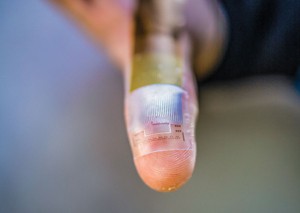
Developed by Stanford researchers and first presented this March, it certainly takes a different route than most flex circuits. Unlike the flexible solutions we’ve had available for a while now, this new elastic IC forgoes the typical metal foil and polyimide composition. Instead, it opts for a potent, innovative mix of Stanford-crafted elastic electronic materials and semiconducting carbon nanotubes, the two of which are woven together in a net-like pattern.
The resulting integrated circuits go far beyond merely flexible. They’re skin-like, fully stretchable, bendable, and elastic - ultimately, a huge leap forward.
It’s not just their stretchiness, either. Stanford’s elastic ICs also appear to be remarkably powerful, with more than 2500 sensors and transistors crammed into a single square centimeter, creating something ten times more sensitive than our fingertips. These circuits can detect whole words of Braille in just a touch, drive 60hz displays all on their own, and so much more.
A Few Applications of EICs
This kind of performance, coupled with such malleability, is hugely impressive. It opens up countless possibilities for both new applications and those that already exist.
A practical pick that immediately comes to mind is (of course) wearables.
Smartwatches, fitness trackers, health monitors - all call for a great deal of flexibility and comfortability, yet each pretty consistently falls flat. Elastic integrated circuits would instantly solve these issues caused by the usage of traditional, rigid components and allow developers to focus on bigger issues like improving battery life, accuracy, etc.
Although, there’s a lot more that can be done with Stanford’s new circuit tech than putting it to use in the next Apple Watch or Fitbit. EICs could also find a good home in areas like:
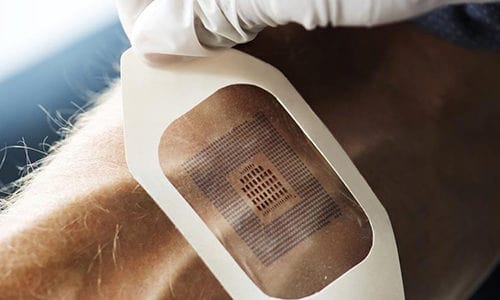
l Medical Devices: The medical field of today has to often make compromises between patient comfort and effectiveness. Truly elastic integrated circuits might one day possibly close this gap, allowing for the creation of flexible biosensors, body-conforming implantable devices, and generally less invasive diagnostic tools.
l Soft Robotics: Though they’re still in their infancy, EICs are bound to be crucial in soft robotics. They will enable robots to to have more natural movement and allow them to interact more safely with humans thanks to lighter-weight and less-sharp designs. The healthcare industry, factories, and even search and rescue missions will all benefit as a result!
l Smart Textiles: The techwear of today is primarily comprised of sweat-wicking clothing that have a whole lot of pockets. Yet, EICs could completely transform the techwear of tomorrow. We could see electronics actually integrated into fabrics rather than existing alongside them, forming smart clothes that could accurately monitor temperature changes, heart rhythm, and all other sorts of physiological signals.
The Stanford EIC Advantage
While some inventions receive little fanfare, make ripples rather than waves, that wasn’t the case for flexible circuits. The move from fully rigid boards to something that could be bent and shaped was revolutionary. It opened up a whole world of technology that would otherwise be completely inaccessible to us, and these recent elastic developments very well might prove to do the same.
Why? Well, they offer some powerful advantages that existing electronics either fail to achieve or can only do so with some dire trade-offs:
l Improved Longevity: Think about your favorite devices. How often have you had to swap out the screen, change out the battery, or replace the device with an entirely new model? Your answer is probably too often. Elastic integrated circuits will help tremendously on that front, allowing gadgets to better bend, stretch, twist, and physically adapt to rough/continued handling or accidents. Durability will also prove better for various environments.
l Better Versatility: Materials that are rigid make for difficult integration. After all, you can’t bend them down, fold them up, or otherwise force them into wherever there’s room. They have very exact specifications and your projects must factor that in. EICs, meanwhile, don’t have this issue. They can be reshaped, moved, and worked into a wide range of materials/products, expanding the possibilities for innovation.
l Broader Market Application: Our world gets more electronics-focused with each passing year, and each of our beloved devices calls for different materials. EICs may be able to tamp down on this, their flexible form potentially allowing for the same circuits to be utilized in markets from traditional consumer electronics to the sports world. This could help improve component availability and cut down on production inefficiencies down the line.
Present Problems & Challenges
EICs are meant to address the limitations of silicon-based electronics, and in many ways, they seem more than poised to do just that. They’re versatile, durable, and powerful. They could be put into use for just about anything imaginable and offer benefits for consumers and producers alike.
Despite their very real promise, though, elastic integrated circuits still have three major challenges to face before they’re readily absorbed into mainstream electronics:
1. Manufacturing Complexity: Producing any kind of circuit device or component takes skill, but EICs take this to another level. Their creation involves sophisticated techniques and materials (some of which none of us outside Stanford’s hallowed halls even know), making it far more complex and costly than most manufacturers are willing to take on.
2. Performance Limitations: Stretchy, skin-like circuits are novel enough to get nearly any electronics engineer excited. But let’s not forget: it’s still very new. Early performance results look great, but we don’t yet know the long-term results of EICs. They could very well have some unforeseen limitations to speed or power inefficiencies. Ensuring they perform just as well, if not better than their rigid counterparts, will be an ongoing mission.
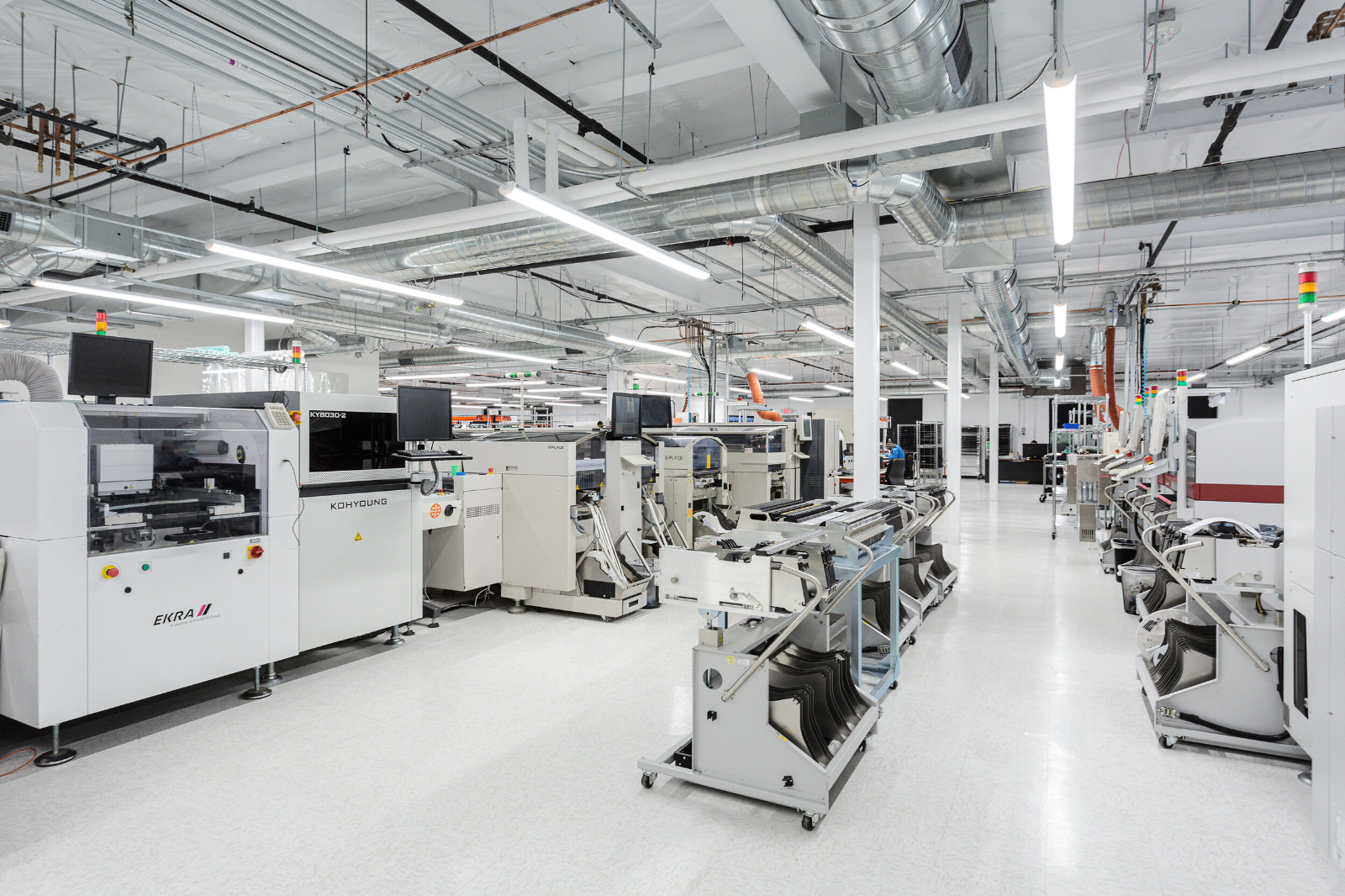
3. Scalability: In order for EICs to be accepted as the industry standard, they’ll need to be made fast, cheap, and in ridiculously high quantities. Scaling up production to meet commercial demands sans quality or performance sacrifices could prove a hard hurdle to overcome for such a cutting-edge innovation.
- 1.
The Stanford EIC Advantage
Improved Longevity,Better Versatility,Broader Market Application
 Ling Tianhao
Ling Tianhao, with 20 years in R&D, has developed his skills at one of America's top ten chip manufacturers.His expertise goes beyond chip design and quality control, showing a strong understanding of PCB technology. His comprehensive knowledge of microchip and PCB technologies establishes him as a versatile professional in the semiconductor industry, driving advancements and solving complex problems.

28 November 2025
25 October 2025
25 September 2025
16 August 2025
10 July 2025