What are Variable Resistors?
Variable resistors are a sub-type of resistor that allows for resistance to be manually adjusted. They typically consist of a resistive element and a contact or wiper that slides along the resistive track. By varying the position of this wiper, the resistance between it and the two ends of the track changes, enabling precise control over the resistance value.
Like most other kinds of electronics components, variable resistors come in a couple different variations. Two of the most common are potentiometers and rheostats, primarily distinguished by the terminals used. The former of these uses three terminals and basically functions like a variable resistance divider, whereas the latter utilizes only two terminals, constructed much like wire-wound resistors.

Potentiometers and rheostats can sometimes see similar applications due to their basic properties. Things like biasing circuits immediately come to mind as variable resistance is essential for setting the operating point/bias of transistors or amplifiers, ensuring optimal performance despite varying, often fast-fluctuating conditions. However, they’re more often suited to different tasks.
For instance, potentiometers are frequently used for volume adjustment in audio equipment, their construction suited for dividing voltage. With resistance changing proportionally between the two terminals as controls are moved, users are given a more customized listening experience than would otherwise be possible. Alongside this, potentiometers often see applications in:
l Display brightness controls
l Instrument tuning devices
l User interface controls
l Measurement device calibration
l Industrial control systems
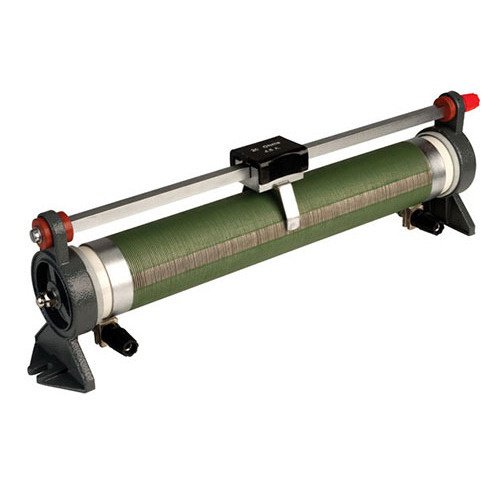
Rheostats, meanwhile, don’t see quite as much use in modern electronics as they once did. Semiconductors saw to that! However, rheostats haven’t been made completely null and void. They still sometimes find themselves employed in appliance temperature regulation, small motor speed control, and other more niche systems.
What are Fixed Resistors?
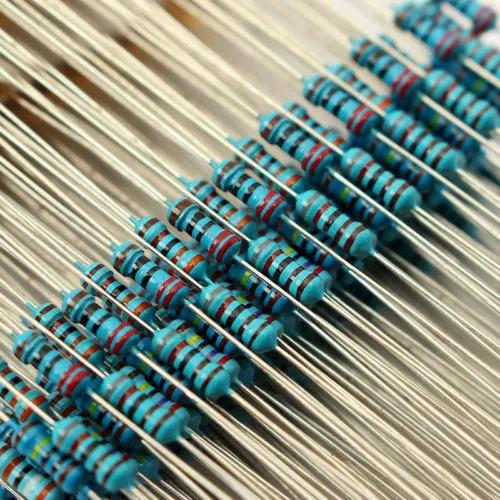
Fixed resistors (as you might expect on account of their name) have a designated resistance value that cannot be manually altered. This value is set during manufacturing and is influenced by a number of factors, especially device dimension and material composition.
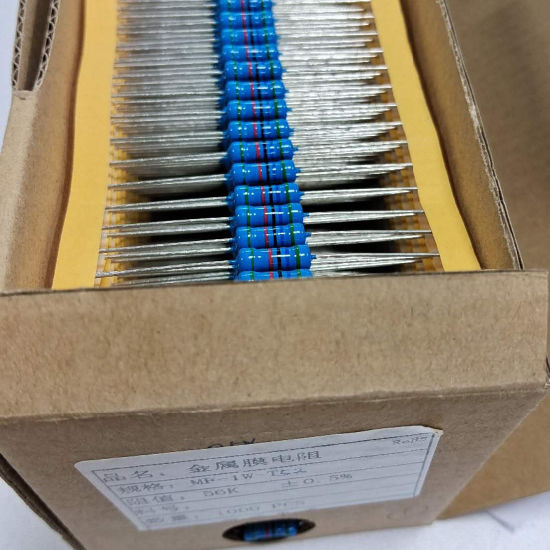
Like their more flexible counterparts, fixed resistors come in various types, too. Carbon film, metal film, surface mount, wirebound, and more all exist on the market, each offering various power ratings, levels of stability, and precision. Some are better at certain jobs than others - metal film best for tight-tolerance applications, thick film for electronics, surface mount for PCB assembly, etc.
But speaking in general terms? Fixed resistors truly shine when it comes to providing specific, stable resistance as well as:
l Current Limiting. Fixed resistors are often employed to limit the current in a circuit, protecting components from damage caused by excessive current or surges.
l Voltage Dropping. In voltage divider circuits, fixed resistors supply a specific voltage output from a higher voltage source - crucial for actually powering various components in a circuit.
l Pull-up/Pull-down Resistors. In digital circuits, these components are used to ensure a stable logic level when a switch is either open (pull-up) or closed (pull-down).
l Biasing and Feedback Networks. Fixed resistors are vital in setting the biasing and feedback networks of amplifiers and operational amplifier circuits, determining the circuit's gain, stability, and operating characteristics.
How to Settle on a Resistor
Knowing a few resistor basics is a step in the right direction yet that doesn’t mean you’ll be above a little confusion or waffling when figuring out what to get. Even the seasoned pros can struggle a bit. With so many sub-types, brands, different power ratings, and form factors available, there’s a lot to wade through.
Looking for a few tips to make the task more manageable? Here’s a little guidance:
l Always keep in mind the three P’s: precision, price, and project requirements.
Okay, that last one is cheating, but you get the point. Every project and circumstance is unique - some circuits are suited to fixed resistance and certain ratings while others might require greater levels of adaptability. Similarly, some projects might call for very expensive components whereas others can be done with more affordable ones. So, before you make any decisions, make a comprehensive list of all your important specifications and use that to narrow down your options.
l Use expert knowledge and online resources to your advantage.
The internet is a magical place, abound with knowledge no matter how niche. Use it! There are countless electronics-centric websites, blogs, and YouTube channels dedicated to helping people through projects just like yours. They’ll probably make finding the right resistor a breeze.
On the off-chance you’re not finding quite what you need, though, don’t forget to turn to actual people rather than just their pages. There are plenty of forums, Facebook groups, and Discords just filled with people ready to offer their electronics engineering expertise. Don’t hesitate to ask for help when you run into a dead end. Odds are, somebody will have the recommendation or solution you seek.
l When in doubt, simplify it down.
All the details getting you down? Feeling lost scrolling through hundreds of options? Re-focus on those basics from before. If you have a circuit that obviously calls for manual or dynamic resistance adjustment, buy a variable resistor that doesn’t break the bank. If your application needs consistency, choose whatever fixed resistor readily available.
Sure, this is far from a full-proof plan, but it’s a good start. Guesstimation, testing, and iteration are the best way to discover what works, anyway - don’t be afraid to jump right in! Consider the circuit with your first resistor choice a prototype, compare voltage and temperature to design requirements, and make alterations as you go along.
l Try to factor in temperature and environmental conditions.
For those already tearing their hair out trying to find a resistor, we’d definitely advice you to skip this step. Although, should you find yourself pleasantly surprised with a smooth(ish) process, one of our biggest pieces of advice is to keep temp in mind before you buy.
Your project will generally operate within certain conditions, although nasty surprises can always pop up. Extreme weather conditions, greater-than-normal vibration, high humidity, and more could pose issues for even the most thoughtfully-crafted circuit. Prepare for these ahead of time by opting for a resistor that can handle worst-case scenarios and your forethought will be well rewarded.
- 1.
What are Variable Resistors?
Variable resistors are a sub-type of resistor that allows for resistance to be manually adjusted. They typically consist of a resistive element and a contact or wiper that slides along the resistive track. By varying the position of this wiper, the resistance between it and the two ends of the track changes, enabling precise control over the resistance value.
 Paul George
Richard Electronics guest author, a Mechatronics engineer and a professional researcher, designer, developer and manufacturer for 3d Cad and PCB. I believe in efficiency, effectiveness and quality of work, and my aim is to provide complete one-roof solutions to complex mechanical and electrical design systems. I have a well-equipped lab with state-of-the-art technology for doing research and providing.


04 September 2026

05 August 2026
04 July 2026

06 June 2026

07 May 2026