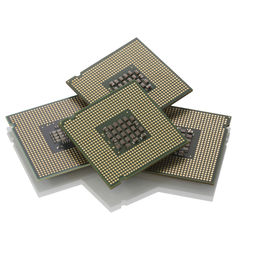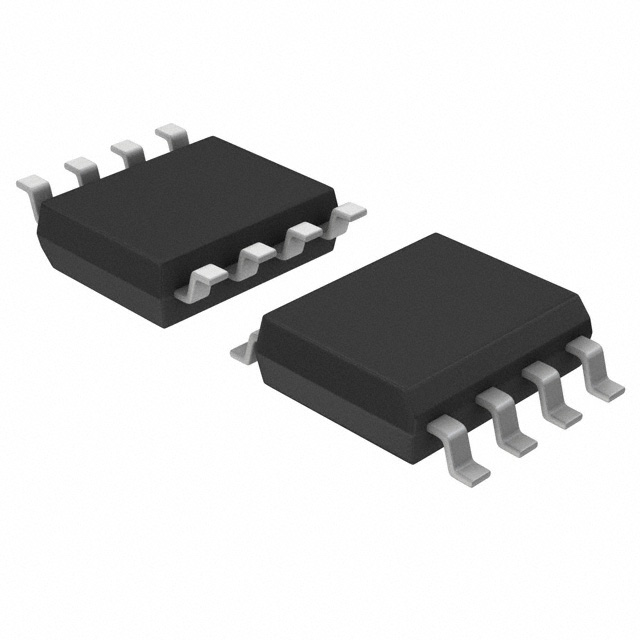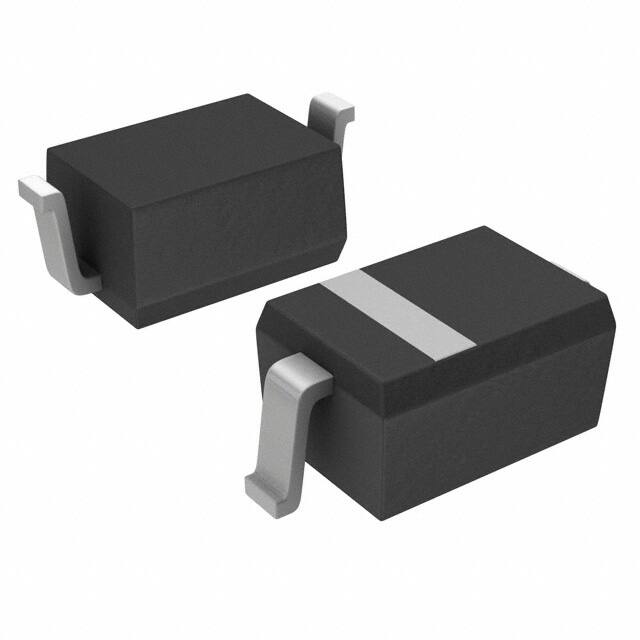
What is a Microcontroller?
Imagine a tiny component tucked away inside the gadgets our world uses every day, one that can do something as simple as controlling your thermostat or as critical as powering a hospital's defibrillators. That's a microcontroller!
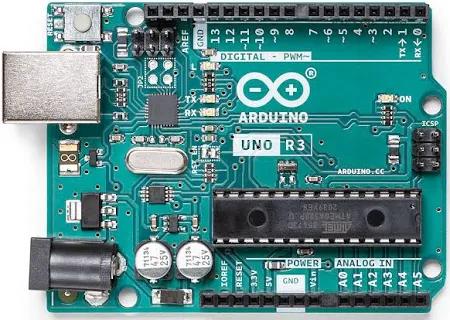
Also known as MCs or MCUs, microcontrollers are essentially miniaturized computers housed on self-contained circuits. But unlike the general-purpose computers we use for things like browsing the web or writing articles much like this one, microcontrollers are designed for specific applications, typically embedded within a larger system to control its operation.
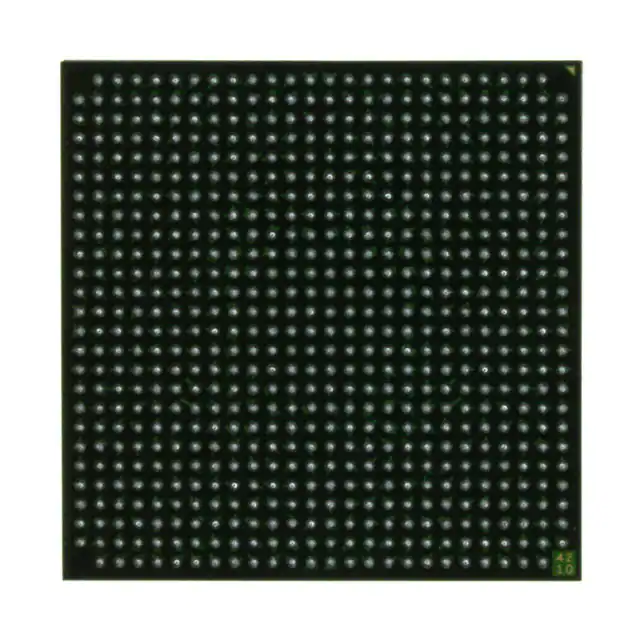
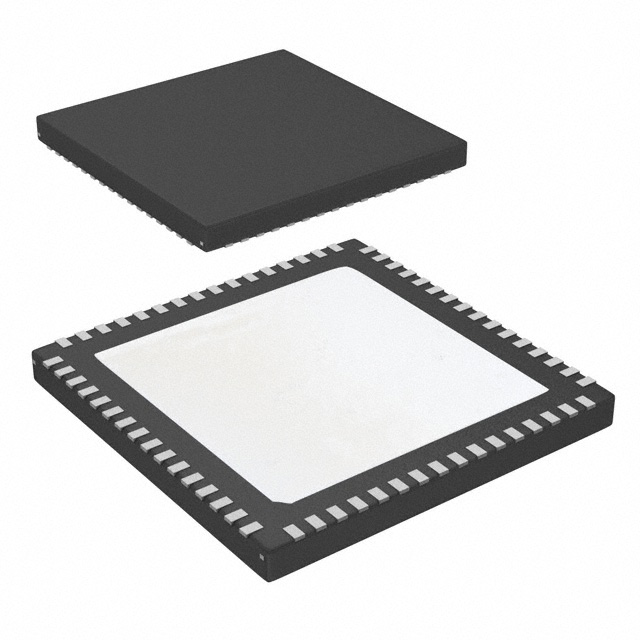
Functionally, they serve as the brain or cognitive center of various electronic systems. Comprised of several even smaller essential elements, including input/output ports, one or more processor cores, memory sources, and related devices, microcontrollers are capable of understanding and following through on rather complex information sets. Small but mighty, MCs can process inputs from sensors, execute predefined tasks, and produce outputs, granting them the ability to control things like motors or displays.
It's slightly surprising how much they're capable of when considering their compact size. Yet, their form factor is indeed more often a boon than a burden.
How? Their compactness actually increases efficiency and diversifies where/how they can be utilized. Combined with microcontrollers' low power consumption and specialized functionality, they're the ideal pick for tasks requiring real-time control or automation.
Components of a Microcontroller
When we talk about MCUs, or really, any kind of electronic, we tend to talk about it as a singular thing. But let's not forget, it in itself is numerous tiny parts working in tandem to form a greater whole. This makeup of components dictates how well a microcontroller functions along with how it is most effectively utilized. So, only makes sense that we should seek to understand all the components these devices are comprised of.
If that sounds like an overwhelming undertaking, don't worry. Microcontroller architecture is surprisingly simple, broken down into five primary bits. Here are what those consist of, plus some helpful info about each one:
1. Central Processing Unit (CPU)
While microcontrollers work as the minds of our beloved gadgets, they, too, have a brain running things behind the scenes. For them, this is the CPU.
Within its confines, the CPU executes a wide array of instructions. These can range from basic arithmetic operations to complex logic functions. The CPU performs calculations, manipulates data, and coordinates the flow of information inside the system. As if that isn't enough, the central processing unit also orchestrates the operation of various peripherals to achieve what the microcontroller is programmed to do, be it to keep a refrigerator running or ensure your airbags deploy during an accident.
2. Memory
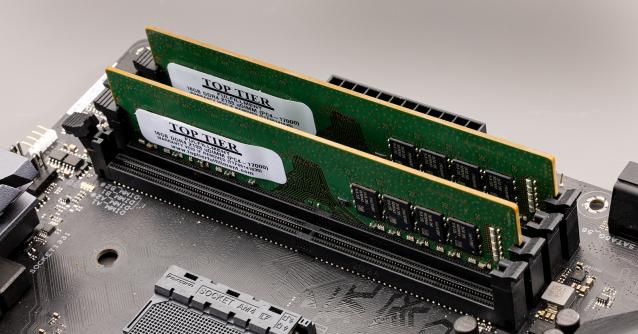
The CPU may seem infinitely more essential, yet memory is also a critical piece of the microcontroller puzzle, enabling it to store the program code and other data necessary to work as intended.
Many kinds of memory exist, but microcontrollers typically feature two primary types: flash and RAM. The first, flash memory, serves as the non-volatile storage space for an MCU's firmware or program code. In other words, it's why a microcontroller's instructions remain intact even when power is shut off.
RAM, on the other hand, provides volatile storage for temporary data during program execution. Although, it's important to point out that this capacity is limited compared to that of full-fledged computers. Take note: resource management is top priority when looking to optimize performance or efficiency!
3. Peripherals
Peripherals often find themselves as add-on extras for many devices. But for microcontrollers? Many are baked into the very system itself.
Communication interfaces, timers, and counters are some of the most common peripherals, with the final two finding widespread application. Alongside these you'll see Digital-to-Analog Converters and, inversely, Analog-to-Digital Converters - an absolute essential as CPUs need analog inputs to be transformed into digital data.
4. Input/Output (I/O) Ports
The translators of the microcontroller world, I/O ports, facilitate communication between said microcontroller and any external devices used. These ports juggle both handling inputs (from sensors, switches, other external devices) and directing outputs to control LEDs, motors, displays, and other peripherals. Through all of this, microcontrollers interface with the external world and interact with their surroundings according to pre-programmed instructions.
5. Clock Source
It would be nice to think MCs just flawlessly work, almost as if by magic. Unfortunately, it doesn't quite work that way. Microcontrollers have to rely purely on data to get by instead.
This needed information is collected from a myriad of sources in order to do as programmed. However, an internal clock source is a major, often overlooked one, used to synchronize operations and control instruction timing. It can be generated in several ways, including internal oscillators, resonators, phase-locked loops, or crystal-drive circuitry.
Microcontroller Types and Architecture
As with most tech available these days, there’s no shortage of choice when it comes to microcontrollers. Microcontrollers exist in many variations and forms, admittedly making it a touch difficult to fully understand your options. Confused yourself?
Well, there are three primary kinds of MCs you should know about. A microcontroller is only as good as the microprocessor it relies on, which is why these main options can be broken down into:
l 8-bit microcontrollers: As the name would suggest, these can process data 8-bits at a time. Their architecture is more simplistic, making for easier debugging, and they are pretty inexpensive as a general rule. But they’re ill-equipped for more complex applications due to limited processing power.
l 16-bit microcontrollers: A better-balanced alternative to their 8-bit counterparts. With double the processing speed, they thrive in more intensive applications like medical devices and industrial controls.
l 32-bit microcontrollers: Have top of the line performance that’s perfect for networking equipment, real-time operating systems, or anything that calls for huge data sets and multitasking. They simultaneously have several drawbacks, such as their high cost, power consumption, and steep programming learning curve.
These aforementioned microcontroller types diverge in important ways - their power, use cases, and roles within various electronics. Architecture distinguishes them, too, albeit somewhat more subtly. Harvard and von-Neumann are the two basic architectures that broadly break up all microcontrollers, impacting how data is exchanged between an MC's memory and CPU.
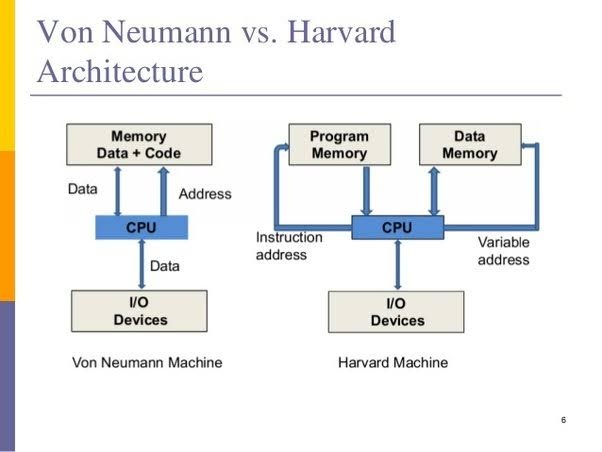
Called ‘RISC MCs,’ microcontrollers that use Harvard architecture have two separate memory spaces, allowing improved data flow through the CPU. They tend to have fewer instructions than those that leverage von-Neumann architecture and typically can execute them in a single cycle. Meanwhile, von-Neumann microcontrollers (CISC MCs) have one shared memory, which can improve data flexibility at the risk of bottlenecking.
What is the Difference Between a Microcontroller and a Microprocessor?
At first glance, microcontrollers and microprocessors nearly seem like one and the same. They’re both essential components in computing; after all, intelligent workhorses that can manage a wide range of tasks or operations. However, while the two share a few similarities, they also feature some significant differences.
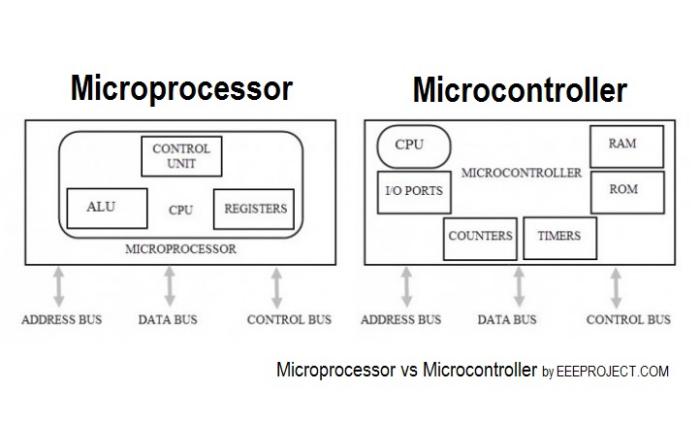
For one, the two technologies serve separate purposes. Microcontrollers are designed to handle specific tasks (for instance, regulating motor speed, computing maintenance predictions, etc.) in real-time, whereas microprocessors are more powerful and general purpose.
Also an essential distinction of the former is that they can only do one task, run one process as determined by their programming. Microcontrollers are simpler but more specialized. Microprocessors are adaptable but somewhat inefficient.
The specialization of the former extends to peripherals, as well, with microcontrollers often featuring those tailored to enhance the ability of interfacing with external sensors, communication networks, etc.
CPUs, memory, I/O ports, additional peripherals - microcontrollers manage to pack them all onto a single chip, providing a self-contained computing solution. Systems are thus less complex than the microprocessors' that rely on external components or expansion cards to form a fully functional processing device. So, though they offer a lot of application flexibility, system design and integration aren't nearly as neat or easy as with microcontrollers!
- 1.
What is a microcontroller used for?
Microcontrollers are used for a wide range of embedded applications where a small, low-cost computing device is required to control and monitor various systems and processes. They are commonly found in consumer electronics, industrial automation, automotive systems, medical devices, IoT devices, robotics, and more. Microcontrollers can execute programmed instructions to perform tasks such as reading sensor data, controlling actuators, processing inputs, and communicating with other devices.
- 2.
What is the difference between Arduino and microcontroller?
Arduino is a platform that encompasses both hardware and software components, designed to simplify the process of creating electronic projects. Arduino boards typically feature a microcontroller at their core. The microcontroller on an Arduino board executes the code uploaded to it via the Arduino Integrated Development Environment (IDE). In contrast, a microcontroller is a standalone integrated circuit (IC) that contains a CPU, memory, and various peripherals on a single chip. While Arduino provides a user-friendly interface and standardized hardware for developing projects, a microcontroller can be used in a broader range of applications beyond the Arduino ecosystem.
- 3.
Is Arduino a microcontroller?
No, Arduino is not a microcontroller itself but rather a platform built around microcontrollers. Arduino boards utilize microcontrollers as their central processing units to execute code and perform tasks. These microcontrollers are typically from the Atmel AVR or ARM families. Arduino provides an IDE, libraries, and a hardware ecosystem that simplifies the process of programming and interfacing with microcontrollers, making it accessible to beginners and hobbyists.
- 4.
What are examples of microcontrollers?
List of common microcontrollers: Altera. Analog Devices. Atmel. Cypress Semiconductor. ELAN Microelectronics Corp. EPSON Semiconductor. Espressif Systems. Freescale Semiconductor.
View More
 Sophie
Sophie, an accomplished electronic designer from Canada, holds a Bachelor's degree in Electrical Engineering from McGill University. She excels in developing advanced control systems that integrate mechanical, electrical, and computer engineering technologies. Her expertise particularly lies in working with electronic components. Notably, she has distinguished herself in conducting research involving Arduino and Raspberry Pi.


04 September 2026
05 August 2026
04 July 2026
06 June 2026
07 May 2026