Before we go into the main reason for this article, you need first to understand the two components involved: the microprocessor and the integrated circuit. You can understand their differences once you learn about their various functions and importance. Read on to learn about these components.
Microprocessor
A microprocessor can be called the brain of a computer system or all electronic devices, as it regulates all the elements in a system or electronic device.
What Is A Microprocessor
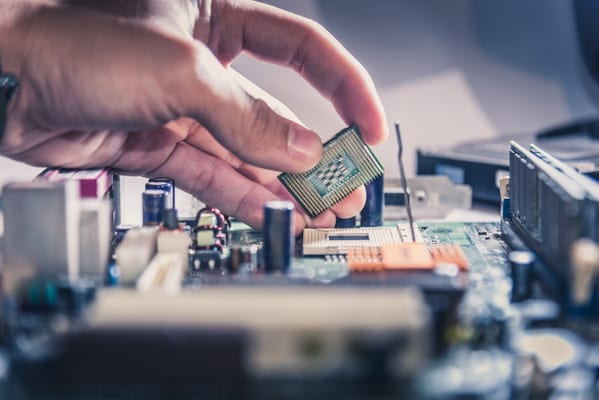
A microprocessor is an integrated circuit consisting of the arithmetic and logic unit (ALU) that enables it to perform the functions of a system's central processing unit (CPU).
Microprocessors are versatile; what this means is that they are capable of performing various roles. They can be used to interpret and execute program instructions and perform arithmetic operations in a system. A microprocessor is an essential component of a system or electronic device, and it is used to control and manage the operations of these devices.
Microprocessors were first created in 1971; the first one was the Intel 4004. Intel 4004 was mainly used to perform mathematical operations in a calculator. Its uses were very limited and some insignificant. Like fine wine, microprocessors have improved over the years and are now one of the most powerful components of computer systems and devices.
There are three types of microprocessors currently in the market. They are:
· CISC (Complex Instruction Set Computer
· RISC (Reduced Instruction Set Computer)
· EPIC (Explicitly Parallel Instruction Computing)
Microprocessors are chips; they are tiny, but they have powerful capacities. They are fast and highly efficient.

Advantages Of A Microprocessor
Microprocessors have various advantages. Here are some of their main advantages:
· Microprocessors have low power consumption.
· It operates at high speed.
· It can be modified easily.
· It can transfer huge amounts of data from one memory location to another.
· It supports multiprocessor and parallel processing.
· They can perform complex arithmetic and logic operations.
Disadvantages Of A Microprocessor
· Microprocessors are only based on machine language.
· They overheat.
· Microprocessors cannot fully be relied on.
Integrated Circuit (IC)
Integrated circuits are used to process and store information on devices. Some of these devices include smartphones, electronic devices, computers, etc. Read on to learn about the various functions of an IC.
What Is An Integrated Circuit
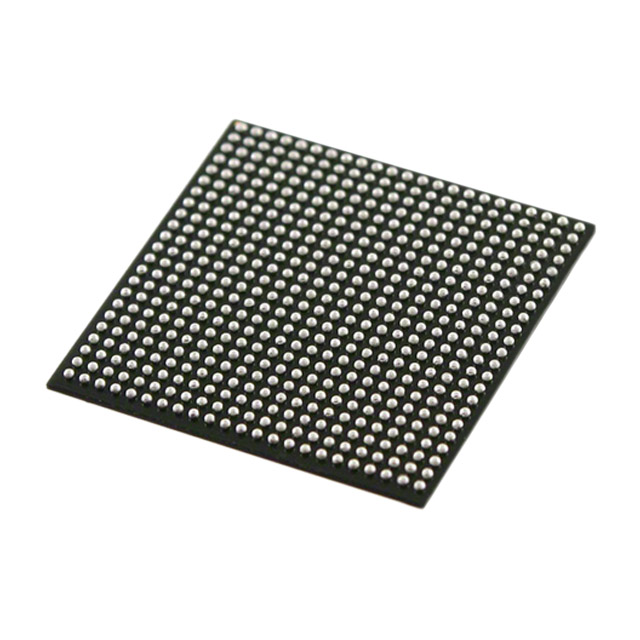
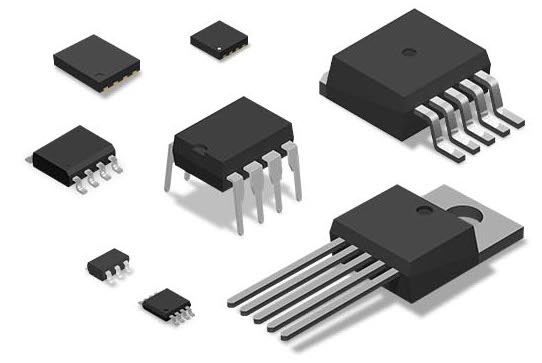
An integrated circuit is a microchip that consists of thousands of interconnected components like resistors, transistors, capacitors and diodes. The function of an IC in a device is essential. To put this in better terms, we can say that most devices can not function without an integrated circuit.
ICs may consist of multiple components, but they are very small. An integrated circuit is made from semiconductor material known as silicon; interconnected components are then formed and wired together on the silicon surface.
Integrated circuits were first created in the 1960s and, like most technologies, have advanced. You can barely find a device without an IC in it. ICs function as microprocessors, memories, and amplifiers in electronic devices.
There are three main types of integrated circuits, and each of them has a variety of uses. They are:
· Digital integrated circuits
· Analog integrated circuits
· Mixed integrated circuits
Advantages Of An Integrated Circuit
IC comes with a lot of advantages, some of the advantages include:
· High-speed performance.
· It requires low power.
· It is small and portable.
· It is reliable.
· It has a low cost.
· ICs operate at high temperatures.
· It has an improved operating speed and performance.
Disadvantages Of An Integrated Circuit
· It handles a limited amount of power.
· An IC’s power dissipation is limited to 10 watts.
· It is delicate.
· It cannot achieve a low-temperature coefficient.
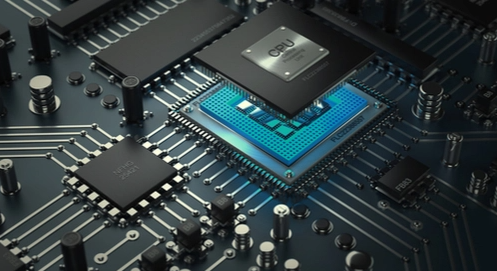
Differences between a Microprocessor and an Integrated Circuit
People often wonder about the differences between a microprocessor and an integrated circuit. This may be a result of their significant functions on electronic devices.
If you have read to this point, you now know the functions and importance of the microprocessor and integrated circuits in a device. Here are the differences between these two components:
· Functions: A microprocessor is an integrated circuit that performs arithmetic and logic functions. Integrated circuits. Microprocessors are the brains of devices that require power. On the other hand, an integrated circuit is as important as a processor. Devices that require power can barely function without an IC. The functions of an IC are based on its design, but they can function as a microprocessor, memory, amplifier, and many others.
· Design: Designing an integrated circuit is easier when compared to designing a microprocessor. Microprocessors are more difficult to design.
· Size: A microprocessor and an IC are both small in size, but an IC is smaller.
· Complexity: A microprocessor comprises a central processing unit, making its design complex. An integrated circuit is made from silicon, where transistors and multiple components are placed. An IC may contain thousands or even millions of components, but they are less complex when compared to a microprocessor.
· Application: Microprocessors and integrated circuits can be used for electronic devices, computer systems, smartphones, and other devices that require power, but ICs are more widely used.
· Processing power: Microprocessors are designed to provide processing power for computers and other devices. On the other hand, not all types of Integrated circuits require the same level of processing power. For ICs, their processing power depends on their designs and types.
· Production: Microprocessors are produced based on the specific amount needed, while mass production is always the case for integrated circuits.
· Cost: Microprocessors are more expensive than ICs based on their complex design. On the other hand, integrated circuits are also costly but less expensive when produced in mass.
There are many differences between microprocessors and integrated circuits, but these are the main differences.
Conclusion
Integrated circuits are lower in cost when mass-produced compared to microprocessors. ICs are more delicate than microprocessors. The microprocessor is an integrated circuit, while an IC, on the other hand, is not a microprocessor but can function as one based on its design.
Microprocessors are used mainly in high-tech devices and play a massive role in controlling and managing these devices. Integrated circuits, on the other hand, are compatible with any device that requires power, whether it is a low or high-tech device.
It is important to note that the differences between microprocessors and integrated circuits do not make any of them more important or better than the other. Just as the various parts or components of the body play significant roles in the body, microprocessors and ICs also play significant roles in power-required devices. They are just designed in different ways, and they have different functions.
 Sophie
Sophie, an accomplished electronic designer from Canada, holds a Bachelor's degree in Electrical Engineering from McGill University. She excels in developing advanced control systems that integrate mechanical, electrical, and computer engineering technologies. Her expertise particularly lies in working with electronic components. Notably, she has distinguished herself in conducting research involving Arduino and Raspberry Pi.


04 September 2026
05 August 2026
04 July 2026
06 June 2026
07 May 2026