
1. Resistors
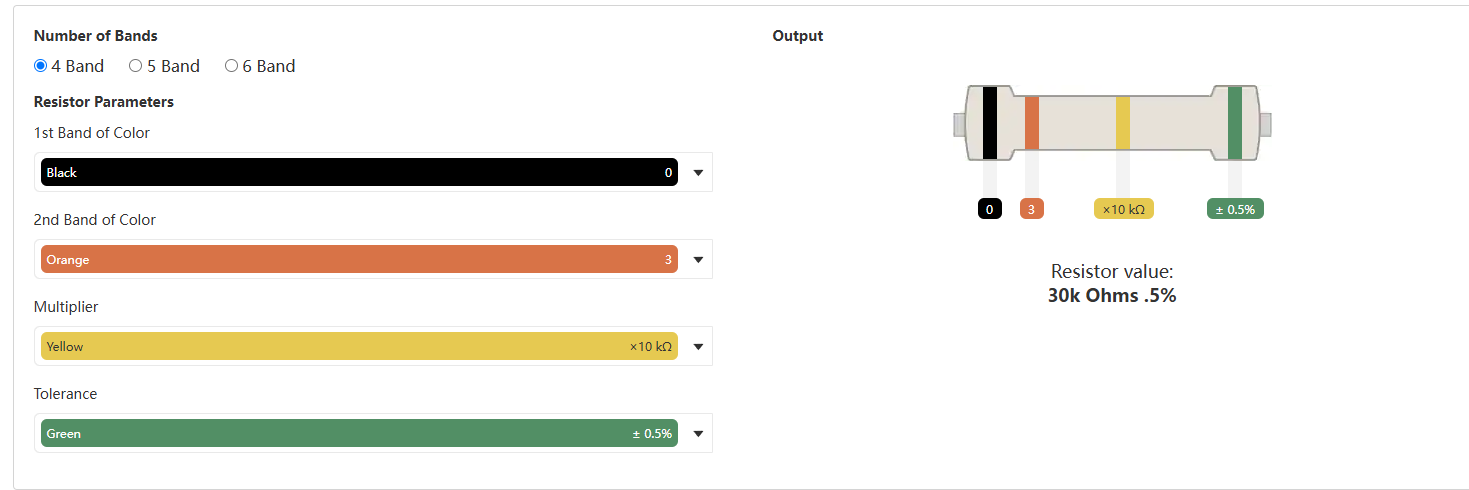
One of the most fundamental components used in modern electronics, resistors can be found in practically everything - audio equipment, gaming consoles, engine control units, data buses. As the term suggests, resistors are passive components that indeed resist current and impede the flow of electricity into linked circuit elements.
This resistance, largely measured in units called “ohms” (Ω), can vary significantly from resistor to resistor as each has its own value and power rating. Luckily, these components are often color-coded to easily indicate their resistance value or tolerance, with higher values offering up greater opposition to current flow than those on the lower end. Additionally, resistors come in assorted power ratings, indicating how much power they can safely dissipate without causing damage or overheating issues.
2. Capacitors

Capacitors are another passive electronic device; comprised of two conductive plates separated by insulating dielectric. Unlike resistors, these components don’t hold back or hinder electrical energy and instead store/release it, much like a battery.
This charge (which is measured in farads) can be stored or discharged very quickly, making capacitors ideal for power supply or timing circuits that rely on rapid energy transfer.
Though many variations exist, capacitors primarily come in four main types: electrolytic, ceramic, film, and paper. Which should be used depends on the kind of conductor and dielectric material present as well as general purpose.
For instance, are you trying to tamp down on voltage surges? Film capacitors are most suitable. Need to block DC signals but not AC? Then you should put paper capacitors to good use.
3. Inductors
Alongside capacitors and resistors are inductors, the final member of the passive component family. They fulfill a similar purpose to the former of these two, handling energy storage. However, where capacitors do so through an electric field, inductors instead use a magnetic field to store energy as current flows through them.
Another difference between these components and capacitors? Inductors are capable of longer-term energy storage, keeping captured electricity as long as the circuit remains intact whereas capacitors only store it temporarily.
Within that aforementioned circuit inductors can fulfill a variety of purposes, and not just holding onto energy. They may also be used for signal filtering, smoothing out fluctuations, or as impedance-matching devices to optimize power transfer efficiency.
4. Diodes
A diode is a semiconductor device primarily tasked with controlling voltages. Generally, this is only done one way, diodes allowing current to flow in one direction while still blocking it in the opposite one. When a voltage is applied across the diode in the forward direction (in more succinct terms, when its anode is positive relative to the cathode), the diode conducts current very easily. Yet, when voltage is applied in the reverse, the diode acts like a sort of stopper or dam, blocking current from flowing.
This unidirectional conductivity makes diodes a bit of the odd duck compared to other electronic components. But, on the flip side, it also makes them ridiculously useful for all sorts of tasks within circuits, such as AC/DC signal conversion or protecting against damage caused by too much (or alternatively, too little) voltage.
Something to keep in mind, though, is that not all diodes are the same. More than even most components, they come in diverse forms. Rectifier, light-emitting, zener, and Schottky diodes can be counted among the most common of the bunch.
5. Transistors

A transistor is a component responsible for amplification processes and switching electronic signals/power. It serves as a base not only for amplifiers but also for digital logic circuits, microprocessors, and more. Though you don’t tend to hear much on the topic, there are actually two main types of transistors: BJTs (bipolar junction transistors, for the yet uninitiated) and FETs (or field-effect transistors).
The former is the one most folks are referencing when transistors are brought up in conversation. This form is made up of three conductive layers: the base, an emitter, and a collector, which works by controlling current flow between the latter two while controlling the voltage applied to the base.
Meanwhile, FETs have three completely different terminals consisting of a source, drain, and a gate. Here, voltage is applied to the gate, which then controls the current between the source and drain.
6. Integrated Circuits (ICs)
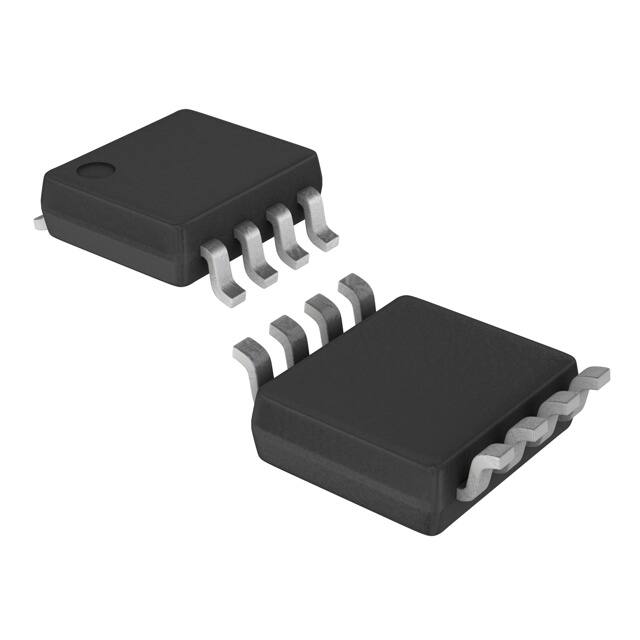
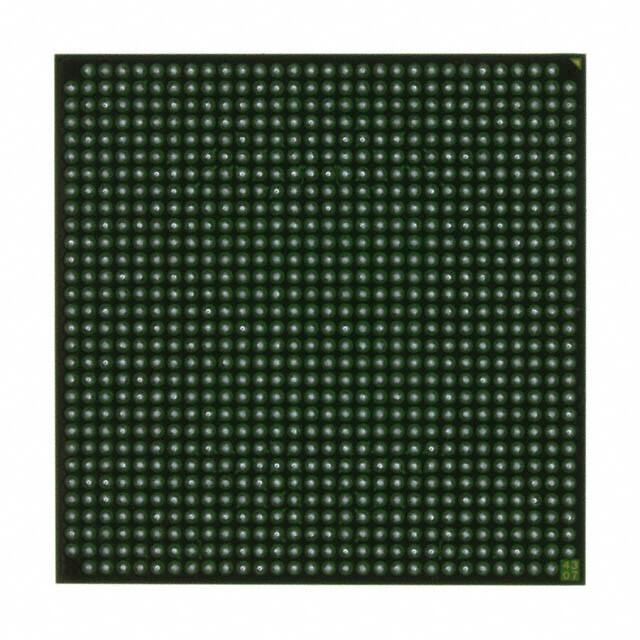
Though used in practically every modern gadget and revolutionary for how it integrates several complex electronic functions into one compact package, an integrated circuit really isn’t anything especially magical. ICs are pretty much just circuits shrunk down to fit on a little chip.
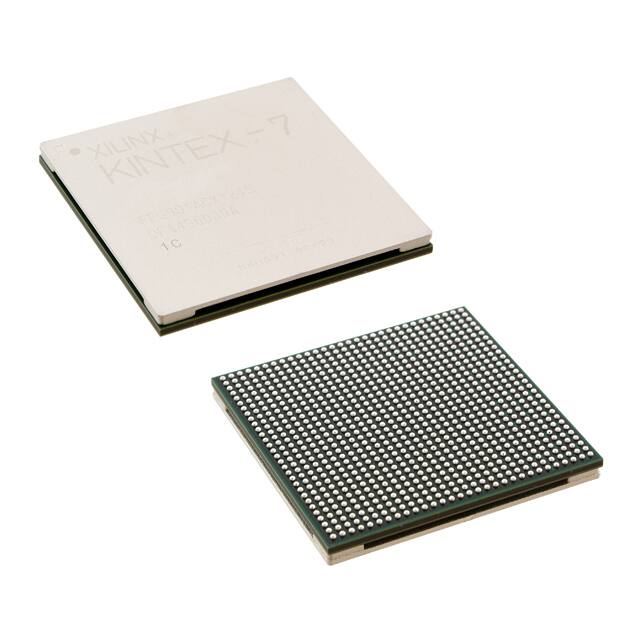
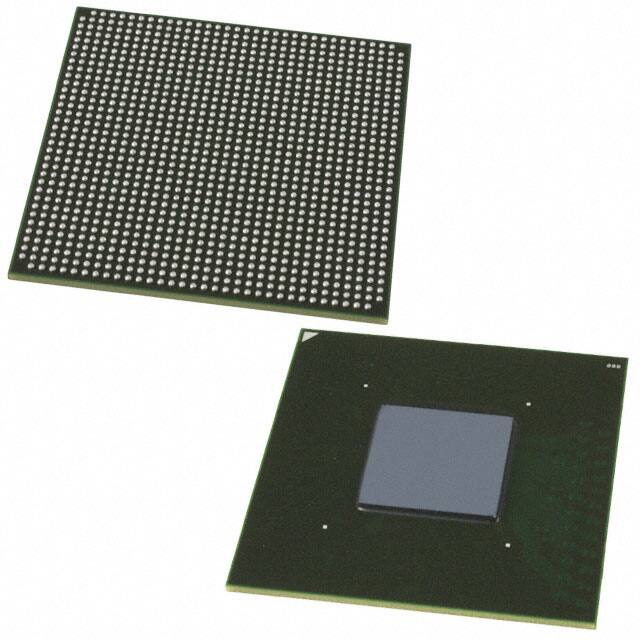
An interconnected web of thousands of transistors, resistors, capacitors, etc. gathered together on a substrate, an IC is truthfully more of an overarching category than a specialized electronic component. As such, a ton of things can be considered an IC! Microprocessors, op-amps, voltage regulators, memory chips—all easily fall within the term’s domain.
7. Sensors
Sensors do precisely what they say on the tin, sensing and responding to stimuli. Whether environmental - focusing on temperature, humidity, light - or physical - monitoring mechanical properties like pressure, motion, proximity - sensors detect changes in their surroundings and convert these changes into signals/data that can be processed by electronic systems.
This, in turn, enables sensors to provide feedback for a wide range of applications. Climate control systems, weather forecasting, and industrial machinery maintenance are just a few obvious ones that would come to most minds. But sensors can be utilized in even more essential, personal applications - for things like airbag deployment, pacemaker pulses, and our phones’ gesture recognition, to name just a few.
Speaking of which, sensors play a huge role in IoT as a whole. They’re what allow our smart devices to collect data, analyze patterns, make real-time decisions, and integrate seamlessly into other systems, helping us live more convenient, efficient lives!
8. Thyristors
Thyristors don’t get a lot of air time even within lists like this one; however, we found them essential to at least mention. Technically a specialized rectifier, a thyristor is a semiconductor device with four layers of alternating positive and negative materials that act like a switch.
Unlike some other components, these devices operate only in off or on and remain in said state until a trigger voltage or current is applied. They’ll remain conducting even once this is removed, barring the event of voltage being reversed or current dropping below a certain level. Because of this, thyristors are hugely beneficial in power supplies, voltage regulators, and other means where high-power control is a must.
9. Crystal oscillators

Not all devices require precise timing, but those that do often rely on crystal oscillators to get the job done. Don’t know what that is, exactly? Well, a crystal oscillator is a bit of a strange device, a circuit that uses a vibrating crystal to generate a periodic electronic signal.
The actual process behind it is somewhat technical but the basics are easy enough to get. In layman’s terms, electricity is applied to a crystal (most typically synthetic quartz), which causes the material to vibrate. This vibration creates a stable and accurate frequency that can then be used to synchronize various electronic functions within a device. Microprocessor clocks are a big application but crystal oscillators can easily find utilization in communications, maintenance, or any other system that calls for precise timing.
10. Connectors
There are so many elements to explore within the realm of electronics, but this is the last we’ll look at today. Connectors are mechanical pieces that link together various components, or even two separate circuits, into a greater whole. Connectors can be broken down into plugs and sockets, the first of which naturally slots into the second.
Once the plug is inserted, contacts on the device make an electrical connection that basically switches on the ability to transmit signals, data, or even power. USBs are a prime example of connectors that we use every day, enabling us to do things like attach peripherals to our computers or simply top off our phone’s battery without having to swap to an entirely new one!
 Sophie
Sophie, an accomplished electronic designer from Canada, holds a Bachelor's degree in Electrical Engineering from McGill University. She excels in developing advanced control systems that integrate mechanical, electrical, and computer engineering technologies. Her expertise particularly lies in working with electronic components. Notably, she has distinguished herself in conducting research involving Arduino and Raspberry Pi.

06 June 2026
07 May 2026
17 April 2026
02 April 2026
02 April 2026