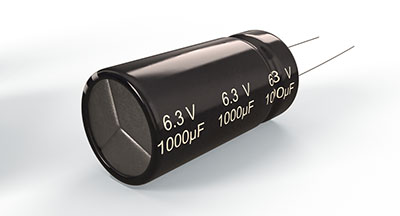
A capacitor is composed of two conductive plates separated by an insulating material, known as a dielectric. When a voltage is applied across the plates, an electric field is created in the dielectric, which stores electrical charge.
Function and Significance of Capacitor:
Energy Storage: Capacitors can store charge and electrical energy, releasing it when needed. They can provide high current in short durations, making them useful for applications requiring burst power.
Filtering: Capacitors can be used in filter circuits to remove noise and interference signals from a circuit, resulting in cleaner and more stable signals.
Voltage Smoothing: In cases where the power supply voltage fluctuates, capacitors can smooth out the voltage by storing and releasing charge, ensuring stable operation of the circuit.
Blocking DC: Capacitors block the flow of direct current (DC) while allowing alternating current (AC) to pass through. This is important in many electronic devices, such as speakers and headphones, to prevent DC current from damaging audio equipment.
Coupling and Decoupling: Capacitors can be used for coupling two circuits, allowing efficient signal transfer. They are also employed as decoupling capacitors, providing transient power to meet peak load demands.

A resistor is an electronic component that restricts the flow of electric current in a circuit. It works based on the principle of Ohm's Law, which states that the current flowing through a conductor is directly proportional to the voltage applied across it and inversely proportional to its resistance.
Function and Significance of Diode:
Current Limitation: The primary function of a resistor is to limit the flow of electric current in a circuit. By offering resistance to the flow of electrons, resistors help control and regulate the amount of current flowing through various components in a circuit.
Voltage Division: Resistors are used in voltage dividers, which are circuits that distribute the input voltage across multiple components in specific proportions. By adjusting the resistance values, resistors can divide the voltage to desired levels, enabling proper operation of electronic devices.
Signal Conditioning: Resistors are widely used for signal conditioning purposes. They can adjust the amplitude and voltage levels of signals to match the requirements of electronic components. Resistors are often employed in amplifiers, filters, and signal attenuators.
Current Sensing: By placing a resistor in series with a load, the voltage drop across the resistor can be used to measure the current flowing through the circuit. This technique, known as current sensing, is vital for monitoring and controlling current levels in various applications.
Heat Dissipation: Some resistors, such as power resistors, are designed to dissipate heat generated by the flow of current. They have higher power ratings and are used in applications where managing heat is crucial, such as power supplies and motor control circuits.
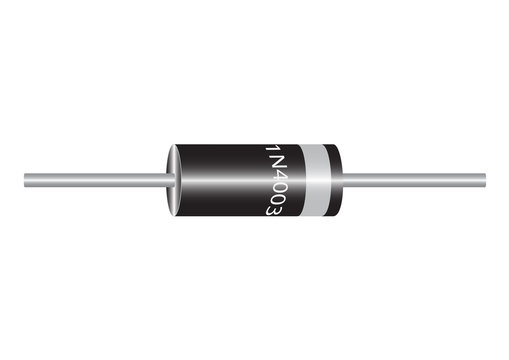
Diode:
A diode is a semiconductor device that allows current to flow in one direction while blocking it in the opposite direction. It operates based on the principle of a PN junction, where one side is doped with an excess of electrons (N-type) and the other side is doped with a deficiency of electrons (P-type).
Function and Significance of Diode:
Rectification: The primary function of a diode is rectification, converting alternating current (AC) to direct current (DC). By allowing current to flow only in one direction, diodes ensure that the current flows in a single polarity, enabling the production of a steady DC output.
Protection: Diodes are commonly used as protection devices. They can prevent reverse currents and voltage spikes from damaging sensitive components in a circuit. Diodes help safeguard electronic devices from potential harm caused by incorrect polarity or voltage surges.
Signal Modulation: Diodes are vital components in signal modulation circuits. They can alter the amplitude, frequency, or phase of a signal, enabling the transmission of information in various communication systems.
Light Emission: Light-emitting diodes (LEDs) are a specific type of diode that emits light when current flows through it. LEDs are widely used for indicators, displays, and lighting applications.
Switching: Diodes can act as switches, allowing or blocking the flow of current in a circuit. They are commonly used in digital logic circuits and power supply designs to control the flow of current based on the presence or absence of a control signal.
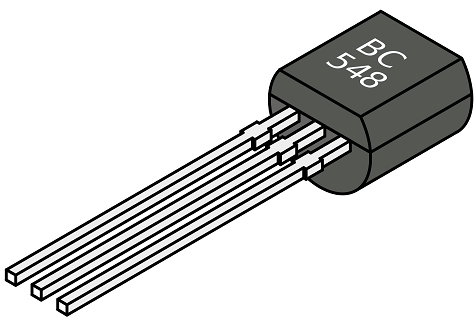
Transistor:
A transistor is a semiconductor device that can amplify or switch electronic signals. It operates based on the principle of the control of current flow through a base-emitter junction. Transistors are typically composed of three layers: an emitter, a base, and a collector (in the case of bipolar junction transistors).
Function and Significance of Transistor:
Signal Amplification: One of the primary functions of a transistor is signal amplification. By controlling the current flowing through the base-emitter junction, a small input signal can be amplified to a larger output signal. Transistors are crucial components in audio amplifiers, radio frequency amplifiers, and other electronic devices that require signal amplification.
Digital Logic Operations: Transistors are fundamental to digital electronics. They can act as switches, allowing or blocking the flow of current based on the presence or absence of a control signal. This enables the implementation of logic gates and the creation of digital circuits and processors.
Current Flow Control: Transistors can regulate and control the flow of current in electronic circuits. By adjusting the base current, the collector current can be controlled, making transistors useful for current regulation, motor control, and power management applications.
Voltage Amplification: In addition to signal amplification, transistors can also provide voltage gain. By connecting multiple transistors in a configuration such as a multistage amplifier, the voltage can be further amplified to meet specific requirements in various applications.
Switching Applications: Transistors are widely used as switches in electronic circuits. By turning on or off the current flow through the transistor, it can control the operation of other components or devices. Transistors enable efficient and precise switching in applications such as power supplies, motor control, and digital circuits.

An inductor is an electronic component that stores energy in a magnetic field when current flows through it. It operates based on the principle of electromagnetic induction, where a changing current induces a magnetic field around the inductor.
Function and Significance of Inductor:
Energy Storage: The primary function of an inductor is to store energy in the form of a magnetic field. When current flows through the inductor, the magnetic field stores energy, which is released when the current changes or is interrupted. This property is utilized in various applications, such as energy storage in power supplies and transformers.
Magnetic Field Generation: Inductors are used to generate magnetic fields for various purposes. They are essential components in electromagnets, motors, and generators, where the magnetic field produced by the inductor interacts with other magnetic components to enable mechanical motion or electrical power generation.
Filtering: Inductors are commonly used in filter circuits to block or attenuate certain frequencies while allowing others to pass. They are particularly effective in blocking high-frequency noise in power supplies and audio circuits, ensuring cleaner and more stable signals.
Impedance Matching: Inductors can be used to match the impedance between different components or circuits. By adjusting the inductance value, the inductor can help optimize the transfer of power or signals between components, maximizing efficiency and minimizing signal reflections.
Inductive Loads: Inductive loads, such as motors and solenoids, require a high initial current to overcome the inductor's inherent property of resisting changes in current. Inductors are used to control and limit the current flow to these loads, ensuring proper operation and protecting the circuit.
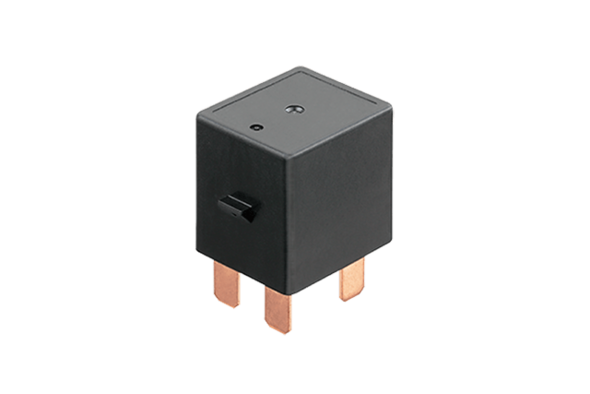
A relay is an electromagnetic switch that is controlled by an electromagnet. It consists of an electromagnet, a movable contact, and a stationary contact. When an electrical current is applied to the electromagnet, it generates a magnetic field, which attracts or releases the contacts, allowing them to open or close the circuit.
Function and Significance of Relay:
Amplification: Relays act as amplifiers, allowing a small control signal to switch higher power circuits. The control signal energizes the electromagnet, which in turn controls the switching of the contacts, enabling the control of larger currents or voltages.
Circuit Isolation: Relays provide electrical isolation between the control circuit (low voltage) and the power circuit (high voltage). This isolation ensures the safety of the control circuit and protects sensitive components from potentially damaging high voltages or currents.
Switching High Power Devices: Relays are commonly used to switch high-power devices, such as motors, heaters, and lights. They can handle large currents and voltages, making them suitable for controlling devices that require significant electrical power.
Complex Circuit Control: Relays are used in complex circuits where multiple control signals need to be combined or coordinated. They can be interconnected to perform logical operations, time delays, and sequence control, making them valuable in applications such as industrial automation and control systems.
Fault Protection: Relays can provide fault protection by monitoring electrical parameters, such as current or voltage levels. If a fault condition is detected, the relay can quickly open the circuit, isolating the faulty section and preventing further damage to the system.
Conclusion:
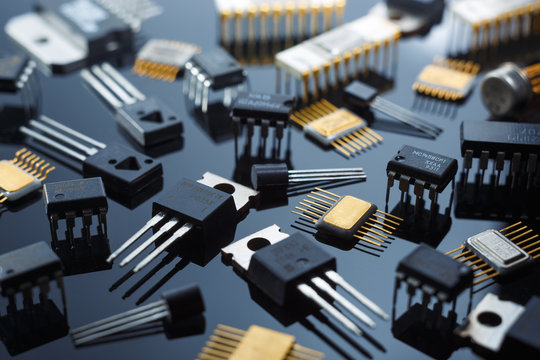
Electronic components are the building blocks of electronic circuits, enabling the control and processing of electric current in various electrical appliances. Capacitors, resistors, diodes, transistors, inductors and relays have specific compositions, working principles, and functions that contribute to the overall functionality of electronic circuits. Understanding these components' working principles and significance is crucial for designing and implementing efficient and reliable electronic systems.
 Sophie
Sophie, an accomplished electronic designer from Canada, holds a Bachelor's degree in Electrical Engineering from McGill University. She excels in developing advanced control systems that integrate mechanical, electrical, and computer engineering technologies. Her expertise particularly lies in working with electronic components. Notably, she has distinguished herself in conducting research involving Arduino and Raspberry Pi.


04 September 2026
05 August 2026
04 July 2026
06 June 2026

07 May 2026