
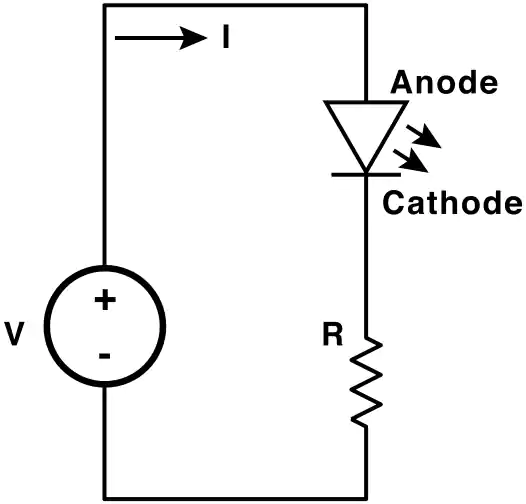

Picking the wrong resistor can break LEDs or shorten their life.For instance, a small 0.2V change in an LED’s voltage can increase current by 7.14mA. This could damage the circuit if not controlled. The calculator helps you find the correct resistor value to protect your parts. You just enter important details, calculate, and use the results.
Key Takeaways
Use an LED resistor calculator to pick the right resistor. This stops your LED from getting too much current.
Check the forward voltage and supply voltage first. Correct values keep your LED safe and working well.
For multiple LEDs in series, add their forward voltages together. This changes the resistor value needed for the circuit.
Pick a standard resistor value slightly higher than the calculated one. This protects the LED from harm.
Test your circuit on a breadboard before finalizing it. This helps you find and fix problems early.
Key Things to Know for Using an LED Resistor Calculator
When using an LED resistor calculator, knowing key details is important. These details help you get correct results and keep your LED safe. Let’s look at the most important ones.
What is Forward Voltage?
Forward voltage is the voltage an LED needs to light up. It’s a small number but very important for calculations. For example, if a green LED with 2.2V forward voltage connects to a 12V power supply, 9.8V must go through the resistor. Without the resistor, the LED might get too much current and burn out. Forward voltage also changes how much current flows because the LED’s resistance drops when it lights up. Always check the forward voltage in the LED’s datasheet before starting.
What is Supply Voltage?
Supply voltage is the total voltage from your power source. It shows how much voltage the resistor must handle after subtracting the LED’s forward voltage. For example, if the power supply is 5V and the LED forward voltage is 1.2V, the resistor must handle 3.8V. Knowing the supply voltage helps you use Ohm’s Law to find the resistor value. Always check your power source to avoid mistakes.
Why LED Current Matters
LED current is the amount of electricity the LED needs to work well. LEDs are sensitive to current changes. A small voltage increase can cause a big rise in current, which might harm the LED. Too much current can make the LED overheat or work less efficiently. The resistor keeps the current at a safe level. Always use the LED current value from the datasheet for the best results.
By learning these details, you can use an LED resistor calculator correctly and keep your LEDs safe.
Number of LEDs in Series
When you link several LEDs in a row, their forward voltage adds up. This changes the resistor value you need. Each LED increases the total forward voltage, so your power supply must provide enough voltage for all LEDs to light up.
For example, if three LEDs are connected in series and each has a forward voltage of 2V, the total becomes 6V. The resistor must handle the leftover voltage from the power supply. This keeps the current safe for all LEDs.
Here’s a simple table to show how more LEDs affect the calculation:
| Number of LEDs | Total Forward Voltage | Needed Supply Voltage |
|---|---|---|
| 1 | V1 | V1 |
| 2 | V1 + V2 | V1 + V2 |
| 3 | V1 + V2 + V3 | V1 + V2 + V3 |
Tip: Always check the total forward voltage before picking a power supply. The supply voltage must be higher than the total forward voltage for the circuit to work properly.
Using LEDs in series has benefits. All LEDs share the same current, making the circuit easier to design. You only need one resistor to control the current for all LEDs. This setup uses fewer parts and works more efficiently.
Remember, the total forward voltage of the LEDs is usually about two-thirds of the supply voltage. This leaves enough voltage for the resistor to control the current. Knowing this helps you build a safe and reliable LED circuit.
Steps to Calculate the Resistor Value
Step 1: Collect Correct Input Details
Before using an LED resistor calculator, gather all needed details. Correct data makes sure the calculation is accurate and keeps your LED safe. You need the LED’s forward voltage, the supply voltage, and the wanted current. For multiple LEDs in a row, add their forward voltages to find the total.
Precision is important because resistor tolerances affect performance. Here’s a table showing how tolerance impacts circuits:
| Resistor Type | Tolerance | Effect on Circuit Performance |
|---|---|---|
| 1% Resistor | 1% | Works well for most uses |
| 10% Resistor | 10% | Some variation, okay for general use |
| 20% Resistor | 20% | Big variation, less reliable |
Tip: Always check the LED datasheet for correct details. Wrong values can cause bad performance or damage.
Step 2: Enter Details into the Calculator
After collecting the details, put them into the LED resistor calculator. Follow these steps for accurate results:
Use volts for voltage, milliamps for current, and ohms for resistance.
For LEDs in a row, use the total forward voltage.
Don’t enter zero for LED voltage drop unless it’s a resistor-only circuit.
If the result isn’t a standard resistor value, pick the next higher one.
Note: Check your inputs carefully. Even small mistakes can give wrong results.
Step 3: Do the Calculation
Once the details are entered, let the calculator work. It uses Ohm’s Law to find the resistor value. The formula is:
Resistor Value (Ohms) = (Supply Voltage - Total Forward Voltage) / Desired Current
For example, if the supply voltage is 12V, the total forward voltage is 6V, and the wanted current is 20mA, the formula is:
Resistor Value = (12 - 6) / 0.02 = 300 Ohms
The calculator makes this process easy and avoids mistakes. After getting the result, choose the right resistor for your circuit.
Understanding the Calculator Results
Picking a Standard Resistor Value
When the calculator gives a resistor value, it might not match a standard one. Resistors are made in specific values, so pick the closest higher one. This keeps the LED safe by staying within its limits. For example, if the calculator says 330 ohms but the nearest standard is 360 ohms, choose 360 ohms. A slightly higher value lowers the current, protecting the LED.
Tip: Check the E-series resistor chart for standard values. The E12 series is good for general use, while the E24 series offers more precise options.
Checking the Resistor’s Power Rating
The resistor’s power rating is as important as its resistance. If the resistor can’t handle the power, it might overheat or break. Use this formula to find the power:
Power (Watts) = Voltage Across Resistor × Current Through Resistor
For example, if the resistor drops 3 volts and the current is 20mA:
Power = 3 × 0.02 = 0.06 Watts
Always pick a resistor with a higher power rating than the calculated value. In this case, a 0.25W resistor would work well. The table below shows why checking power ratings matters:
| Why Power Rating Matters | Explanation |
|---|---|
| Prevents Overheating | Staying within limits avoids damage and failure. |
| Protects Against Surges | High-resistance and anti-surge resistors add safety. |
| Ensures Long-Term Use | Correct ratings improve reliability over time. |
Making Adjustments for Real Circuits
Real circuits may need resistor changes for better performance. Things like temperature, part tolerances, and layout can affect how the LED works. For example, in amplifier circuits, you might adjust resistors to match sensor outputs. In a Wheatstone Bridge, adjustable resistors help measure unknown resistances.
Here are some examples where resistor changes are useful:
Amplifiers: Match resistors to sensor outputs.
Accelerometers: Use accurate resistors for measuring acceleration.
555 Timer Circuits: Change resistors to adjust timing.
LED Circuits: Pick resistors based on forward voltage and current.
These examples show how small resistor changes can improve circuits. Always test your circuit after making changes to ensure it works properly.
Practical Example: Using the Calculator for a Red LED
Example Parameters: Forward Voltage, Current, and Supply Voltage
To find the resistor for a red LED, you need three things: forward voltage, current, and supply voltage. A red LED usually needs 1.8V to 2.2V to light up safely. The current, often found in the LED datasheet, is about 20mA for most red LEDs. Too much current can harm the LED. The supply voltage is the total voltage from your power source. In this example, we’ll use a 5V supply.
Tip: Check the LED datasheet for correct forward voltage and current. Wrong values can make your circuit work poorly.
Step-by-Step Calculation Process
Follow these steps to find the resistor value:
Write down the LED forward voltage (e.g., 2V) and current (e.g., 20mA).
Note the supply voltage (e.g., 5V).
Use this formula:
Resistor = (Supply Voltage - LED Forward Voltage) / LED Forward Current
Plug in the numbers:
Resistor = (5V - 2V) / 0.02A = 150 ohms
Check the resistor’s power rating with this formula:
Power = Voltage Across Resistor × Current Through Resistor
For this example:
Power = 3V × 0.02A = 0.06W
Pick a resistor rated at 0.25W or higher.
Note: If you use more LEDs in a row, add their forward voltages before calculating.
Choosing the Final Resistor Value
Resistors come in fixed values, so your result might not match exactly. If 150 ohms isn’t available, pick the next higher value, like 160 ohms. This lowers the current slightly, keeping the LED safe.
For instance, using a 5V supply with a 2Ω resistor allows 750mA of current. The resistor drops 1.57V and uses 1.125W of power. If the supply voltage rises to 12V, you’ll need a 12Ω resistor, which uses 7W. Lowering the supply voltage to 3.43V removes the need for a resistor.
Tip: Test your circuit after choosing a resistor to make sure it works correctly.
Tips for Using an LED Series Resistor Calculator
Check Input Values Carefully
It’s important to use correct input values. Before starting, make sure your supply voltage, forward voltage, and current are accurate. Even small errors can cause wrong results. This might harm your LED or shorten its life. For example, using the wrong forward voltage could give you the wrong resistor value. This could make your circuit overheat. Always compare your data with the LED datasheet to avoid mistakes.
Tip: If unsure about the supply voltage, measure it with a multimeter.
Find Accurate LED Details
Getting the right LED details is key for good calculations. Use trusted sources like datasheets or reliable guides. These provide the forward voltage and current needed for your LED. For example, the formula to find the resistor value is:R = (Vs - Vf) / I
Here, Vs is the supply voltage, Vf is the forward voltage, and I is the current. Tutorials can help explain this for different setups, like series or parallel LEDs. Using accurate information ensures your calculations are correct.
Good sources include:
Manufacturer datasheets for your LED.
Electronics guides with step-by-step instructions.
Tutorials on resistor and LED setups.
Test Your Circuit Safely
After calculating, test your circuit to check if it works. Build it on a breadboard first. This makes it easy to fix any problems. Use a multimeter to check the current through the LED. It should match your calculation. If the current is too high, try a resistor with a higher value. Testing carefully protects your parts from damage.
Note: Always turn off the power before changing your circuit.
Using an LED series resistor calculator keeps your LED circuits safe. It finds the right resistor by using forward voltage, supply voltage, and current. Follow these steps: collect input values, use the calculator, and check the results. This makes the process easy and avoids mistakes.
Try different setups to learn more. Testing various LED designs helps you see how resistors change circuit performance. Always test your circuits after calculating to ensure they work well and stay safe.
Tip: Begin with basic circuits and slowly move to harder designs to get better at using the tool.


