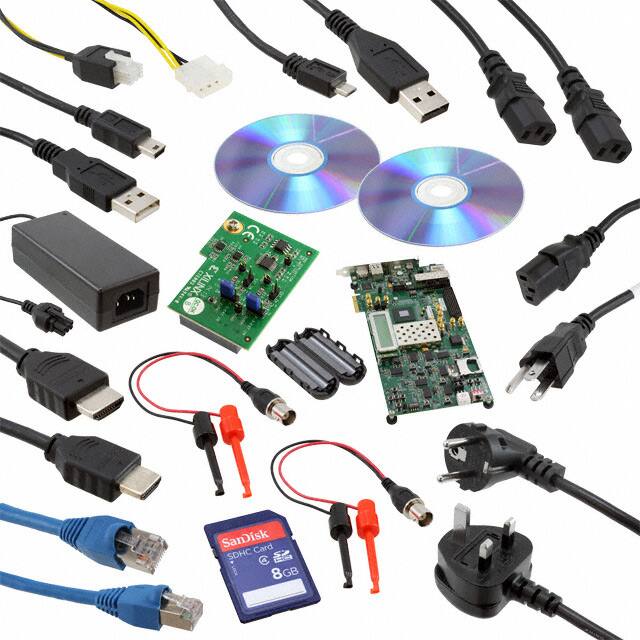
An Electronic Component is simply a physical component in the electronic system that can control the electronics in the relevant field. Starting from the simple vacuum tubes to the complex circuits of Robots, the part of electronic components is played. In 1883, the Edison Effect was discovered by Thomas Edison, the principle on which Vacuum tubes work. In 1904, Fleming Valve was invented by Fleming Valve, which was utilized as a Radio wave detector. In 1906, Le de Forest invented a basic component in amplifying signals also called Audion. In the early 20s, the discussed vacuum tube was the base of the electronic industry such as television, computers, radio, etc. In the same way the example of the transistors and integrated circuits. Starting from the simple circuit boards to the integrated circuits and from integrated circuits to Surface Mount Technology, electronic systems have revolutionized amazingly.
The Most important inventions in the field of electronic systems are Artificial Intelligence and the Internet of Things. Machine learning and artificial intelligence play roles in the development of smart devices and applications that improve the learning, practice, and adapting of complex tasks. Artificial Intelligence is simply a bundle of technologies that allow computers to work on several advanced functions, adding the capability to speak, understand, and even translate the language, data analysis, and recommendations accordingly.
The Internet of Things is a network of connected devices that connect and exchange data with other IOT devices and make a cloud in that way. This system is composed of different sensors, software, and digital & mechanical machines. These systems work in every field whether it is household things or any industrial level thing. In the Internet of Things, data is being transferred without person-to-person dealing or person-to-computer dealing.
Electronic systems have completely evolved into communication systems, computer systems, Medical devices, Transportation Systems, and consumer electronics. There are sub-divisions in the electronics engineering systems such as embedded systems, power electronics, digital electronics, analog electronics, Radio Frequency Engineering, and VLSI (Very Large Scale Integration) Design systems.
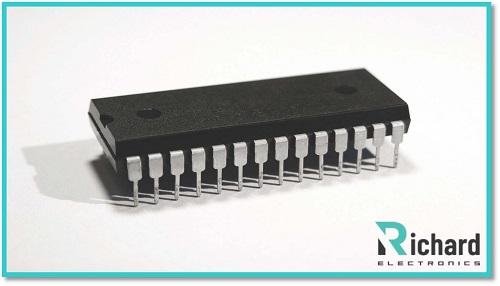
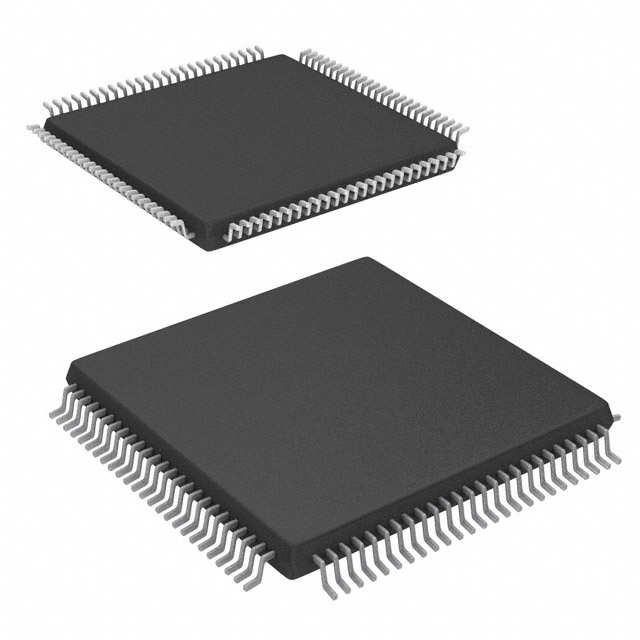
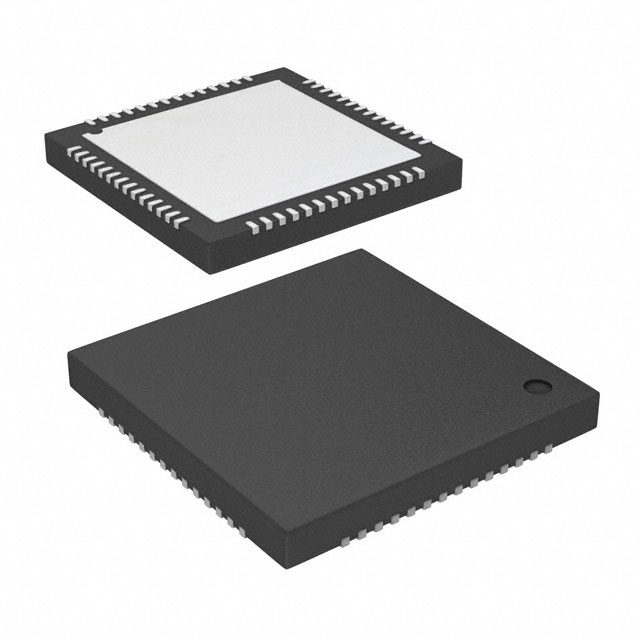
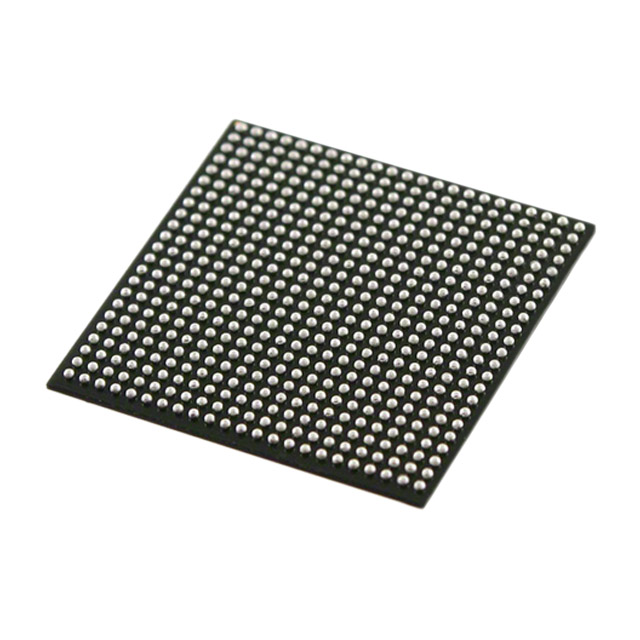
Figure 1 Integrated Circuit (IC)
Historical Background:
ICs also known as integrated circuits have revolutionized the electronics industry after the invention of integrated circuits thousands or even millions of transistors, diodes, amplifiers, and capacitors could be embedded in a tiny chip. Forming a complete circuit all these components are connected on a single semiconductor wafer.
In 1947 a combination of the words resistor and transfer and transistors were invented, the invention of the transistor later set the stage for modern-day computers. Later in 1951 ways to lay thin paths of metal were invented. These parts have the same function as wires. This invention solved the wiring problem between smaller electronic components and connecting them. This was the beginning of modern-day integrated circuits.
Integrated circuits & their importance:
Integrated circuits, sometimes known as microelectronic circuits or simply chips, are wafers of semiconductor material, in which thousands of transistors, capacitors, diodes, and resistors are embedded.
Due to their ability to carry thousands of electronic components, ICs are the building blocks of modern technology systems. Their power processing in an efficient manner makes them very important in modern-day electronic systems.
Application of ICs:
· ICs are available in various shapes and sizes, so they play a vital role in several fields as per their shape and size. Applications of ICs in major fields are discussed below.
· Computers: In RAM, GPUs & CPUs of computers the Integrated circuits act as backbone. They are a crucial part of the computer components that play a central role in the storage, processing, and communication tasks.
· Logic Devices: Integrated circuits are fundamental components of all types of gates performing essential logical operations.
· Memory Devices: In RAM or ROM, are memory devices integrated circuits are used to store the relative data.
· Audio Amplifiers: To boost audio signals for good-quality sound in speakers or headphones we use integrated circuits in modern-day amplifiers.
· Microcontroller: Microcontrollers are equipped with ICs that have a memory, a processor, and input/output peripherals on a single chip combined. These microcontrollers are the backbone of the automation and control industry.
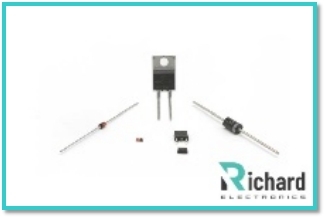
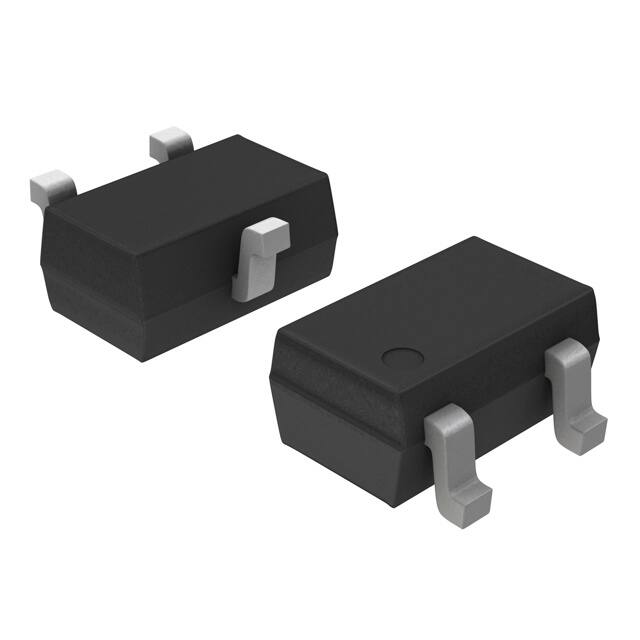
Figure 2 Different discrete semiconductors
Historical Background
With the invention of vacuum tubes the history of discrete semiconductors started it was in the early 20th century when these tubes were invented. In consumer electronics like radios, amplifiers, and early computers vacuum tubes were the first of its kind of active electronic component used. As time passed with the new developments in the field of solid-state technology, the boom in the electronic industry marked a significant milestone in the mid-20th century, many electronic components were invented such as transistors or diodes which led to the development of discrete semiconductors. In these modern materials, design technologies, and manufacturing processes semiconductor technology has advanced rapidly. Nowadays Enhanced reliability, higher power densities, and improved performance are offered by discrete semiconductors as well as other electronics components of a similar kind.
What are discrete semiconductors?
Forming the backbone of various electrical systems and devices discrete semiconductors are fundamental components in modern electronics. Discrete semiconductors focus on performing individually as compared to integrated circuits, which perform multiple tasks in a single package. So we can define discrete semiconductors as a single device performing a single function, for example, diodes transistors, and thyristors. Let's explain these devices for a better understanding
Diodes: Being unidirectional devices diodes allow the current flow in only one direction and block the opposite direction, diodes also called p-n junction diodes, are formed by joining the p-type and n-type junctions together.
Transistors: in the field of electronics the electronic components that are used to perform the function of switching and amplifying electronic signals are known as transistors. Transistors could be of two types either BJT (Bipolar junction transistors) or FET (field-effect transistors) in nature depending upon the type of configuration we are applying.
Thyristors: in high-power applications in the field of electronics, the electronic components that switch and control four-layer semiconductors are known as thyristors. Thyristors have a unique property, until the current falls below a certain threshold they remain on once triggered.
Optoelectronic devices: One of the most emerging technologies is, emitting, detecting, or controlling the light on the principles of photoelectronics, these devices function by interacting with light.
Applications of discrete semiconductors:
· For rectification, signal demodulation, voltage regulation, and safety of circuits diodes play a vital role.
· In switching, amplification, and digital logic circuits transistors are a fundamental component in electronics.
· The property of latch in on state with minimal control input makes it useful for maintaining conduction.
· In many types of sensors, remote controls, and lighting displays we use a variety of optoelectronic devices.
3. Resistors:
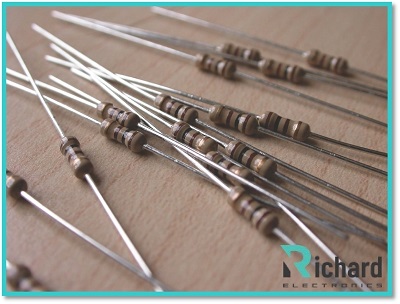
Figure 3 Resistors
Historical background
In 1827 the resistors were discovered by Georg Simon Ohm. He was a German electrician born in the city of Erlangen in 1878. He noticed current flow through different conductive materials doesn’t pass through with the same ease. Parameters such as the type of material and some external factors such as temperature also play an important role in this phenomenon. George described this phenomenon as the resistance of material then he proposed the important Ohm law.
Resistor and its importance:
Resistors act as passive components in the field of electronics which means they need an external voltage course to operate and then resist the flow of current. Understanding the Resistor is so simple phenomenon that we can realize resistance is just a pretty normal property of wires by measuring the resistance of a specific length of wire. As mentioned above resistors are passive devices hence they do act actively in our electric circuits. So with the help of resistors, we can have the exact amount of current and voltages in the circuits that we want.
Applications of transistors:
· To overcome the danger of overflow of current through LEDs we employ the resistor. Resistors protect against the overflow of current through the LEDs.
· As we know resistance is produced by the collision of electrons inside the circuit. This collision in results produces a lot of heat when current is flowing through the conductive material. That’s the reason we find resistors in many heating devices, for example, microwaves, heaters, electric stoves, etc.
· The resistor can act as a voltage divider by dividing the potential difference, we require this phenomenon when we are working with devices that require lower voltage levels to operate.
The terms IF, RF, and RFID stand for intermediate frequency, radio frequency, and radio frequency identification respectively. Here we will try to explain these terms one by one
IF (Intermediate frequency):
This intermediate frequency is a type of frequency that the carrier signal is shifted to, during the process of reception or transmission. When we mix the local oscillator signals with the carrier signal we can create the intermediate frequencies. This mixing results in a signal at the beat frequency or difference between them. For easier amplification, we utilize the intermediate frequency for easier amplification and filtering before final detection by shifting high-frequency signals down to lower frequencies. We utilize the intermediate frequency signal in several devices like radio receivers (superheterodyne), in these types of receivers the input signals before final detection is done, will be shifted to an intermediate frequency for the process of amplification.
Applications of intermediate frequency:
· We use Intermediate frequency for three general reasons, Firstly for very high frequencies reaching up to (GHz) values, to properly perform the signal processing circuitry. Transistors, capacitors, and inductors cannot process high-value gain without instability. That’s why we must replace them with high-frequency techniques such as waveguides and strip lines. So we use the technique of converting high-frequency signals into lower IF values for signal processing.
· The second most important application of Intermediate frequency is we can tune to different stations in the receivers. So Intermediate frequency is used to convert different stations' frequencies into a common frequency.
· Third the frequency selectivity can also be improved by the Intermediate frequency. The signals that are close together in a frequency, separating them is a very common task in communication circuits.
RF (Radio frequency):
The electromagnetic radiation spectrum has an oscillation rate the measurement of this rate represents the radio frequency. The radio frequencies range from a higher value of 300 (GHz) to a lower value of 9 (kHz). The radio frequency can used for different types of wireless communication and broadcasting with the use of antennae and transmitters. When a radio wave is transmitted number of cycles per second is measured in hertz which is the unit of radio frequency.
Applications of radio frequency:
The radio frequency fields play a vital role in many types of wireless communications. TV broadcast stations, mobile phones, and satellite communication systems, all operate under the radio frequency spectrum. Other than communication devices many daily life electrical equipment work on radio frequency signals such as microwaves, and garage door systems.
RFID (Radio frequency identification):
Two components together tag and reader make the radio frequency identification system. The system is equipped with one or multiple antennas to emit radio waves and a radio frequency identification tag is used to receive the signals. Tags can be either active or passive depending upon the type of application being used, to communicate their identity and other information to nearby readers.
The radio frequency identification tag that is powered by a battery is known as a passive tag because they do not have a battery equipped with it. From one serial number to several pages of data, radio frequency identification tags can store a range of information.
We can carry the reader as they are mobile components of radio frequency identification systems, they also can be mounted overhead or can be mounted on a post.
Applications of radio frequency identification:
To transfer data radio frequency identification systems use the radio frequencies. The most common applications of radio frequency identification are related to health care and hospital settings these include, inventory control, personnel data tracking, tracking of equipment properly working or malfunctioning, and collecting and monitoring the data of patients. To ensure that correct medication and medical devices are being given to patients we also use radio frequency identification-based systems. Distribution of counterfeit medical devices or devices is also prevented through radio frequency identification systems. The electronic medical records systems to provide the data are also based on radio frequency identification. Similarly, the reader systems in radio frequency identification can also be built into a cabinet, building, or even a room.
5. Relays:
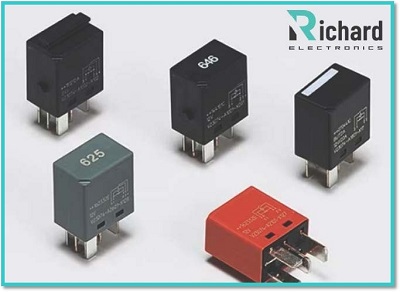
Figure 4 Relays
A relay is simply an electro-mechanical device, that is used to close or open a switch manually and it helps to connect or disconnect the two circuits. Rather than operating it manually, an electromagnet is controlled by the electrical signal, in such a way it connects or disconnects the circuit. A relay works on the mechanism of electromagnetic induction. When a current is applied in an electromagnet, a magnetic field is induced around it. When the supply, the coil goes back to its original position, known as the de-energizing of the relay.
There are different kinds of Relays such as solid-state and electromechanical. But mostly the electromechanical relays are used. An electromechanical relay consists of an electromagnet, switching points, mechanically movable contact, and springs in it. The electromagnet in it is composed of a copper coil on a metal core. Both two ends of the coil are connected to the relay. These two pins are used as DC supply pins. Usually, two more contacts are there, known as switching points that connect the high ampere load. These contacts are known as (NO) normally open, (NC) normally closed, and (COM) common contacts.
Applications of relays:
Relay can be used in DC Circuits or AC circuits. In AC circuit relays, for zero position every current, the coil of relay demagnetized and it would create a moment of continuous breaking of the circuit. So, AC relays are composed of certain processes that proper magnetism is given to stay away from the problem.
Relays are used to secure the electrical system and to lessen the damage to the device or any of its parts connected with the system because of overvoltage or current. These are utilized to control maximum voltage circuits with the minimum voltage signal in the field of some kind of modems and audio amplifiers. Their uses include lighting control systems, telecommunication, process controllers in industries, VDFs, Protection devices, etc.
6. Sensors:
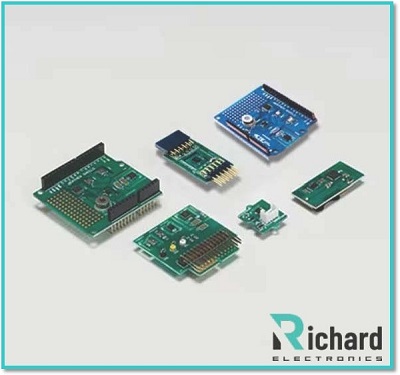
Figure 5 Different Sensors
A sensor is an equipment that detects and responds to any input physically. The input can be heat, moisture, light, pressure, or anything. The output is usually an indication that is a human-readable display at the location of the sensor or transmitted electronically within a network. An important role is being played by sensors in the Internet of Things field. In an information cloud, they make an environment for collecting and initiating data about a certain environment so it can be checked.
There are several types of sensors i.e. active or passive. An active sensor is the one that requires an external power source on the other hand the passive sensor doesn’t need an external power source. The passive sensor is dependent on the environment for its power with the help of heat energy or light energy. Another way through which sensors can be differentiated is by whether they are analog or digital. This can be based on the output they produce. The analog sensors convert the input from the environment to the output, which is continuous. Sensors are usually differentiated by the kind of environmental factors such as Accelerometer, chemical, Humidity, Motion, Optical, pressure, and temperature.
Applications of sensors:
Sensors are used in monitoring, process control, and safety in our domestic or industrial life. These are used in the home automation system, Intrusion prevention system (helps to control traffic), fire prevention system, server room monitoring, agriculture monitoring, vehicle management, industrial automation, environment monitoring system, parking guidance system, time and attendance marking system, and access control system, etc. These are also used in the diagnostic process monitoring and curing purposes. Therefore, these sensors can change the process of our lifestyle by turning the safe and secure modern technology. From dawn to dusk, these sensors play a vital role in our modern life.
7. Optoelectronics:
Historical background:
The photoelectric effect is one of the earliest physical properties, which laid the foundation of modern optoelectronics in 1947. The phenomenon of emitting electrons when a material is exposed to light is known as the photoelectric effect. The first PIC known as a photonic integrated circuit prototype was invented by the Bell Labs researcher Stewart Miller in 1969. The model was a modulator and single-integrated laser till Intel invented its first microprocessor in 1971.
Optoelectronics and its importance
Optoelectronics mainly focuses on light-detecting devices. Optoelectronics is an emerging technology in the field of electronics, its sub-discipline of photonics which is related to the study and applications of light-emitting or detecting devices. To convert energy between light and electricity we use optoelectronics devices like, solar cells light emitting diodes, and LEDs are extremely utilized. A large amount of green energy is produced for our world that illuminates the efficiency of optoelectronics devices.
Applications of optoelectronics:
· For transmission purposes converting electrical signals into light laser diodes and photodiodes are critical components in such systems. The growth of the Internet has been propelled by to unparalleled bandwidth and efficiency of fiber optic networks.
· Now physicians can visualize the internal organs by endoscopy, in which optoelectronics are very crucial. The way the devices in endoscopy perceive and interact with visual information has been transformed a lot by optoelectronics.
· Renewable energy has benefitted a lot from the research and inventions in the field of electronics optoelectronics. The photoelectric effect plays a vital role in the property of solar or PV cells in converting sunlight into electricity. Optoelectronic researchers have modernized energy as a sustainable power source by improving the efficiency of solar cells. To enhance the light absorption and increase the conversion rate optoelectronics devices are used in solar concentrators.
· In biometric and security applications optoelectronics play a significant role. The pattern recognition algorithms and image sensors to recognize individual based on their facial features are based on facial recognition technology that is possible only by optoelectronics.
8. Capacitors:
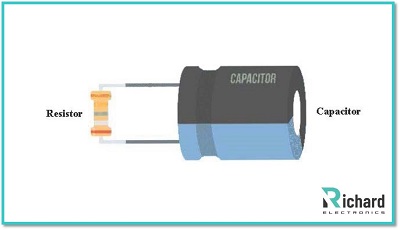
Figure 6 Capacitor
Historical background:
The capacitor used In many modern devices and systems originates back in the 18th century, When German scientist Ewald George discovered that a charge could be stored, things began to change. He achieved it by connecting an electrical generator to a glass container of water. A Dutch scientist Pieter Van Musschenbroke, invented the first capacitor on the idea of Ewald George in 1745 and also named his invention Leyden jar. His invention came out as a ground-breaking invention and paved the way for the invention of modern capacitors in the 19th century.
Capacitor and its importance:
Capacitor sizes vary as per the application and a device consists of two conductive plates used to store charge between them, and this ability to store charge of the capacitor is termed as the capacitance of capacitor. Two charges +ve charge and –ve charge exist on the two plates of the capacitor. We can determine the value of these charges by the supplied electric field between the plates of the capacitor, which is proportional to the voltage difference V supplied to the capacitor.
Applications of the capacitor:
· Mostly we termed capacitors as energy-storing devices because of their ability to store energy, which is its primary application. In many pulse power devices, we utilize capacitors, such as generators, pulsed lasers, particle accelerators, and electromagnetic gadgets.
· Easing the outcome of a rectifier the power condition is used for this purpose widely in power supplies whether it's complete or half. The capacitance is the backbone of this conditioning of power. The smooth current fluctuations are generated by using the capacitors for signal control circuits.
· The capacitor can act as a power factor correction capacitor in many power supply distributions. In this case, we measure the VA value for the capacitor.
· Not handling the storage energy could be dangerous so capacitors make sure the safety while storing massive amounts of energy in electrical systems.
· In designing and developing RF coupling and decoupling devices capacitors play the role of backbone however to operate with a capacitor proper RF performance is required. However, while dealing with the lower frequencies the performance can vary.
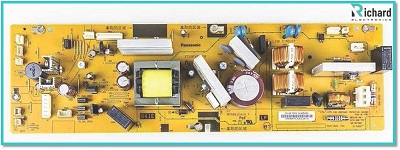
Figure 7 Board mounted power supply
For a given application in the electrical or electronics field, the board board-mounted power supply is a vital source for providing the right type of electrical power. These boards are designed in a way so they can be mounted directly to the PCB (known as printed circuit board). Minimizing the effect of variations, smoothing, and filtering the power being delivered the board Mounted Power supply are vital component in the field of electronics.
Operation:
Most electronic devices typically operate on low voltage DC power which is well regulated. This kind of power supply to the electronics devise is generated by the board Mounted Power supply. Higher voltage AC or DC power is converted into lower voltage DC power by the board board-mounted power supply that can be utilized by the printed circuit boards.
Applications of printed circuit board:
There exists a wide variety of printed circuit boards in the field of electronics we will explain them in detail below
For automation at the industrial level we use printed circuit boards to provide power for motor drives, sensors, and PLCs
Telecommunications systems are incomplete without the printed circuit board, routers modems and switches are powered by printed circuit boards at large scales around the globe.
Printed circuit boards are very useful in the medical field, by providing them a contact supply of power at lower and higher voltage levels without variations.
We all are well aware of the use of printed circuit boards in computers and their backbone-like importance in the functioning of computers and laptops
Printed circuit boards are widely used in the consumer electronics side as well, many daily life electronics devices making our life easy are equipped with printed circuit boards. These devices include tablets, mobiles, and gaming gadgets.
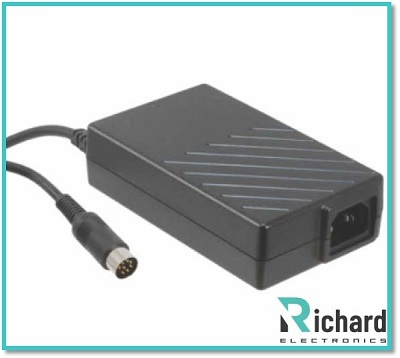
Figure 8 Off-board power supply
As the name suggests off-board power supply is a type of external device that is used to provide power to an electrical system or device. An external power source or wall socket is used to plug in these types of off-board power supplies. DC adapters, AC adapters, modern power banks for mobile phones, and car chargers we use in our daily lives are examples of off-board power supplies.
Applications of off-board power supplies
The off-board power supplies are used as AC to AC adaptors. The devices that are required to drive voltage and power from the main power do not contain internal components we use AC-DC adaptors which are a type of off-board power supply.
The off-board power supplies are used as DC-to-DC converters, which convert the DC voltage from one level to the other. To provide a correct value of voltage to a system or device we use the DC to DC converters which are a type of off-board power supplies used as DC to DC converters. Taking power from a single source DC-DC converters can increase or decrease the voltage.
The collection of individual batteries or individual battery cells also known as a battery pack is a type of off-board power supply. The batteries are battery packs configured in a series or parallel connection or a combination of both. This setup delivers the desired value of voltage and is used in consumer electronics at large scales such as modern electrical cars and in many industrial applications. These packs are usually made up of cylindrical cells. By soldering, spot welding, or adhesives these cells are connected in packs.
 Ling Tianhao
Ling Tianhao, with 20 years in R&D, has developed his skills at one of America's top ten chip manufacturers.His expertise goes beyond chip design and quality control, showing a strong understanding of PCB technology. His comprehensive knowledge of microchip and PCB technologies establishes him as a versatile professional in the semiconductor industry, driving advancements and solving complex problems.


04 September 2026
05 August 2026
04 July 2026
06 June 2026
07 May 2026